


Natural Ways to Sweeten Green Tea Without Sugar

Last Updated: November 3, 2026
Quick Summary
To sweeten green tea without sugar, use honey, maple syrup, agave, stevia, monk fruit, fruit juice, or whole fruit. Add the sweetener once the tea is warm but no longer boiling, stir until it dissolves, and taste before adding more.
- Green tea turns bitter from water that is too hot, steeping too long, too much leaf, or old tea.
- Start with about half a teaspoon of honey per six-ounce cup of tea.
- Stevia and monk fruit are far sweeter than sugar, so begin with a small pinch or a few drops.
- For iced tea, dissolve the sweetener in a splash of warm water before stirring it into the cold tea.
- Delicate steamed greens pair best with a neutral touch like honey, agave, or white grape juice.
Table of Contents
- Why Green Tea Turns Bitter and How Sweetening Fixes It
- How to Sweeten Green Tea Without Sugar: Natural Options
- How to Sweeten Hot Tea Without Sugar
- How to Sweeten Tea With Honey: Ratios and Timing
- How Much Sweetener to Add: A Gradual Guide
- Sweetening Iced Green Tea: Cold-Brew and Shake Methods
- Pairing Sweeteners With Green Tea Varieties and Brewing Methods
- Frequently Asked Questions
We love how flexible tea is: hot, iced, even as a mixer. When customers ask how to sweeten it without just dumping in sugar, our first answer is usually 'brew it better first,' because a lot of what people try to sweeten away is really bitterness from water that's too hot or a steep that's too long. Once the cup is right, a little natural sweetener can bring out the flavor and take care of a craving. We love to use honey or monk fruit in our tea. Here's how we do it.
Why Green Tea Turns Bitter and How Sweetening Fixes It
Some bitterness is part of green tea's character; a harsh cup usually means the leaf gave up too much at once. A little sweetness balances that edge without hiding the tea.
The fix is rarely more sugar: brew better first, then add a small, well-chosen sweetener.
Bitterness is not a flaw in green tea; it signals the leaf gave up too much at once. Lower the water temperature and shorten the steep, and harshness often softens.
- Too hot water pulls tannins fast
- Too long a steep does the same
- Too much leaf concentrates the bite
- Stale tea tastes flat, so people reach for more sweetener than they need
Fix those four and you need far less sweetener.
How to Sweeten Green Tea Without Sugar: Natural Options
The seven best natural ways to sweeten green tea without sugar are honey, maple syrup, agave, stevia, monk fruit, fruit juice, and whole fruit or purée. Each adds sweetness in a different way, and each suits a different tea style.
One thing to be clear about: honey, maple syrup, agave, and juice are still sugars. They taste more interesting than white sugar, but they don't have fewer calories or less effect on blood sugar by much. Only stevia and monk fruit add sweetness without sugar. If you're managing diabetes or counting calories, check with your clinician about which fits
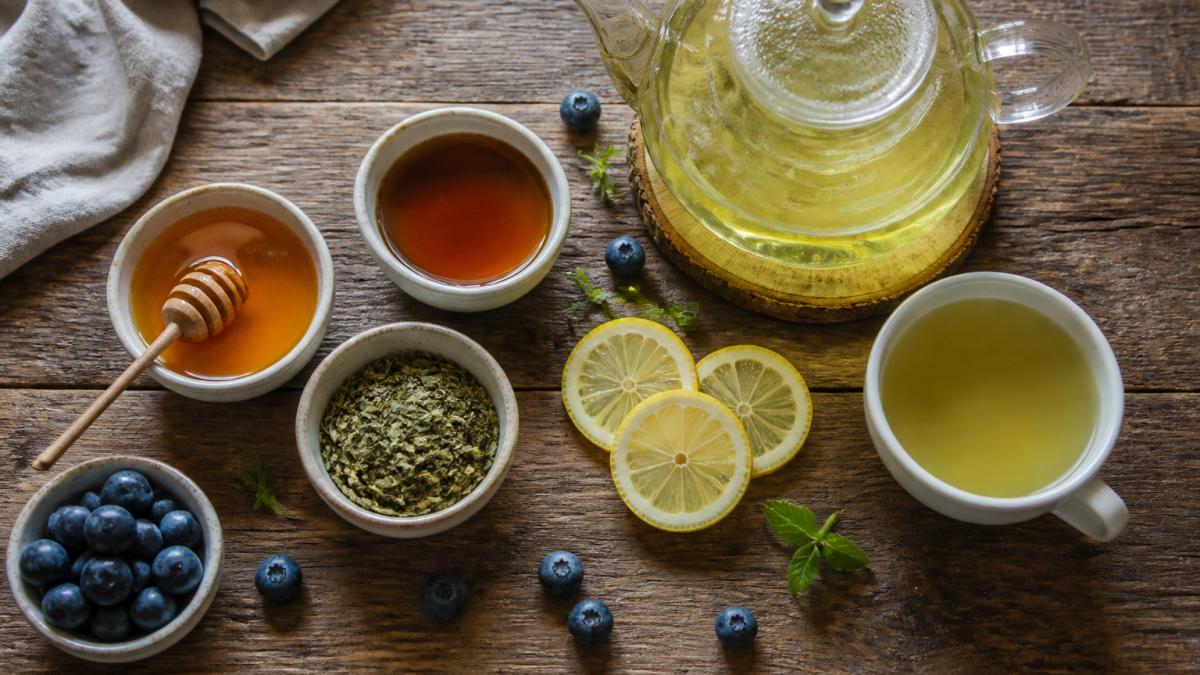
Infographic displaying natural sweeteners for green tea alongside fresh ingredients on a wooden table.
Honey: The Traditional Choice
Honey is the classic sweetener for green tea because its floral notes echo the tea's own aroma. A green tea with honey-like sweetness, such as Lemon Green, gives readers a reference point for how honey complements green tea. A mild clover or wildflower honey adds roundness without overpowering delicate leaves. Strong, dark honey can mask a light green tea entirely.
Add honey to tea that has cooled slightly; boiling water dulls its aroma, so stir it in once the cup stops steaming hard.
Best for: drinkers who want a natural, familiar sweetness. Skip if: you keep a strict sugar-free diet, since honey is still a sugar.
Maple Syrup, Agave and Other Liquid Sweeteners
Liquid sweeteners blend into tea faster than crystals and bring their own character. Maple syrup adds a warm, woodsy note that suits toasted or nutty green teas. Agave is mild and neutral, letting the tea lead. Molasses is too heavy for most green tea, though a few drops work in spiced blends.
Use them sparingly. A teaspoon of maple syrup goes a long way in a six-ounce cup. Stir while the tea is warm so the syrup dissolves evenly.
Best for: anyone who wants sweetness that dissolves without grit. Skip if: you dislike a flavor that competes with the leaf.
Stevia and Monk Fruit: Low-Calorie Alternatives
Stevia and monk fruit are plant-based sweeteners that add sweetness without sugar (the FDA). Both are much sweeter than sugar, so only a small amount is usually needed.
Start with a very small pinch or a few drops. You can always add more, but you cannot take it out. Anyone with a medical condition should check with their doctor first.
Best for: calorie-conscious drinkers and sugar-free routines. Skip if: you are sensitive to aftertaste; use monk fruit instead of stevia.
Fruit Juice, Frozen Fruit and Fruit Purées
Fruit sweetens green tea with natural sugar and adds aroma at once. Readers who want a fruit-forward cup that already carries sweetness without added sugar can try Blueberry Green. White grape juice is the most neutral, lifting sweetness without changing the tea's identity. Pomegranate juice brings color and a tart edge.

Our Tropical Green blends mango and passion fruit with green tea for a fruit-forward cup. For home brewing, a splash of juice or a few muddled berries does the same job. To taste how fruit can sweeten green tea naturally before experimenting at home, try Tropical Green. Add fruit to tea that has cooled a little so the flavors stay bright.

Best for: iced tea and anyone who wants flavor, not just sweetness. Skip if: you need a clear cup; juice and purée cloud the tea.
How to Sweeten Hot Tea Without Sugar
To sweeten hot tea without sugar, add your sweetener while the tea is warm but no longer boiling, stir until it dissolves, then taste before adding more.
Here is the order that works:
- Steep the tea and remove the leaves.
- Let the cup rest for a minute or two.
- Add a small amount of sweetener.
- Stir for a few seconds until it disappears.
- Taste, then adjust.
The resting step matters: water just off the boil can flatten honey's aroma and make stevia taste sharper.
Sugar-free sweeteners behave differently in a hot cup. While these natural additions provide a quick fix, exploring various sugary syrup swaps can help you refine your palate and discover more nuanced flavor profiles for your daily brew.
A few practical notes:
- Stevia and monk fruit are potent, so use a light hand.
- Fruit juice adds sweetness and body at once.
- A pinch of cinnamon or a slice of fresh ginger can make tea taste sweeter without any sweetener at all.
That last trick is worth knowing. Our Cinnamon & Spice is built exactly this way, naturally sweetened with cinnamon, clove, and pink peppercorn over dark-roasted green tea. If you want to drink a green tea that is full of flavor and fills a craving this is a green tea you would never guess is a green tea.

How to Sweeten Tea With Honey: Ratios and Timing
To sweeten tea with honey, start with about half a teaspoon per six-ounce cup and adjust from there. Add it once the tea has cooled slightly, and stir until fully dissolved.
Honey behaves differently from granulated sugar because it is already a concentrated sugar solution with a little water. Timing matters as much as amount: honey added to boiling water loses delicate aroma, honey added to cold tea clumps. The sweet spot is warm tea you can comfortably sip.
A simple starting guide:
- Delicate green tea: 1/2 teaspoon per cup
- Fruit-forward blends: 1/4 teaspoon per cup
- Spiced or roasted blends: 1 teaspoon per cup
Taste after each small addition. You can always add more, but you cannot remove what is already there.
Watch out: if honey has already clumped in a cooling cup, do not keep stirring in cold tea. Stir in a splash of hot water first to thin the honey, then swirl the cup so it disperses evenly without diluting the whole mug.
How Much Sweetener to Add: A Gradual Guide
The right amount of sweetener is the least you need to smooth the tea's edge. Add sweetness in small steps and taste between each one. It beats guessing and protects the tea's character.]
Try this sequence:
- Brew and strain the tea.
- Taste it plain and note the bitterness level.
- Add a quarter of your planned sweetener.
- Stir and taste again.
- Repeat in small steps until the edge softens.
- Stop as soon as the tea tastes balanced.
Adding it gradually saves sweetener, and many people find their taste adjusts over time. Readers fine-tuning sweetness may want a green tea whose natural character they can taste clearly while adjusting additions, such as Matcha.
Sweetening Iced Green Tea: Cold-Brew and Shake Methods
Sweeten iced green tea by dissolving your sweetener in a small amount of warm water first, then stirring it into the cold tea. Sugar and honey resist cold liquid, so this warm water step prevents grit at the bottom of the glass.
Cold-brewing changes the equation. Leaves steeped in cold water for several hours pull out less bitterness, so the finished tea often needs less sweetener. Blueberry Green can be cold-brewed for iced tea, a method suggested on its product listing.
For a quick glass, try the shake method:
- Add sweetener and a splash of warm water to a shaker.
- Pour in cold tea and ice.
- Shake hard for ten seconds.
- Strain into a glass.
The shake chills, dilutes, and dissolves in one step, the fastest route to a smooth, sweet glass of iced green tea.
Pairing Sweeteners With Green Tea Varieties and Brewing Methods
Match the sweetener to the tea and the sweetness lands better. Delicate sencha and other light steamed greens want a neutral touch: a little honey, agave, or white grape juice.
Brewing method shapes sweetness too: cooler water and shorter steeps leave less bitterness, so you need less sweetener overall. For brewing guidance on a specific green tea blend, see Blueberry Green Tea: A Complete Brewing Guide.
Sweetener | Best Tea Style | Add When | Watch For |
|---|---|---|---|
Honey | Light steamed greens | Warm, not boiling | Dulls in boiling water |
Maple syrup | Toasted or nutty greens | Warm | Flavor can dominate |
Agave | Delicate sencha | Warm or cold | Easy to overpour |
Stevia | Any, in tiny amounts | Warm or cold | Herbal aftertaste |
Monk fruit | Matcha, bold greens | Warm or cold | Very potent |
Fruit juice | Iced and fruit blends | Cooled | Clouds the cup |
Two habits do most of the work: brew gently, then add sweetness in small steps. Do both and you will taste the leaf, not just the sugar.
Octavia Tea offers more than 120 organic loose-leaf teas, hand-blended using natural flavor essences and pure essential oils, with no artificial ingredients.
Frequently Asked Questions
What is the healthiest way to sweeten green tea?
Stevia and monk fruit add sweetness without sugar. Honey or fruit juice adds flavor along with natural sugar. Whichever you choose, start with a small quantity and taste before adding more. Keeping the total added sweetener modest preserves green tea's natural grassy flavor and avoids masking its aroma.
Can honey sweeten green tea without overpowering it?
Yes. Honey dissolves best in tea that has cooled slightly, so stir it in after steeping rather than at a rolling boil. Start with a small amount and add more to taste.
How do I sweeten green tea without sugar or honey?
Try purified stevia leaf extract, monk fruit extract, a splash of white grape or pomegranate juice, or muddled frozen fruit. Stevia and monk fruit are sugar-free sweeteners that dissolve in hot or cold tea. Fruit juice adds natural sweetness and aroma, so start with a small amount. For iced tea, dissolve it in a little warm water first, then stir it into the cold tea with cold tea to blend evenly.
Does brewing green tea differently make it taste less bitter?
Yes. Bitterness often comes from over-steeping or water that is too hot. Use cooler water rather than boiling and avoid over-steeping, then remove the leaves. Shorter steeping extracts less of the bitter compounds while preserving the tea's natural sweetness and aroma. If your tea still tastes sharp, try a lower temperature before adding more sweetener.


Octavia Tea Sign In
Create New Account