


Arbor Teas Alternative for Premium Blends

Table of Contents
- Why Tea Drinkers Seek an Arbor Teas Alternative for Premium Blends
- Quick Comparison: Premium Loose-Leaf Sampler Sets
- How to Choose High Quality Loose Leaf Tea
- Organic Tea Sourcing and Certification: What to Verify
- Natural Flavoring in Tea: Essential Oils vs. Artificial Additives
- Price Per Serving: Why Premium Blends Cost More Than Tea Bags
- Matching Premium Blends to Your Buyer: Cafes, Spas, and Gift Shops
- Frequently Asked Questions
Last Updated: October 15, 2026
Why Tea Drinkers Seek an Arbor Teas Alternative for Premium Blends
Shoppers searching for an Arbor Teas alternative for premium blends are usually chasing the same three things: verifiable organic sourcing, honest flavoring, and a price that makes sense per cup. At Octavia Tea, we hear this constantly from cafes, spas, and gift shops that want a deeper bench of premium blends without losing the transparency they built their menu on.
The reasons repeat across almost every conversation we have. Selection depth tops the list, followed by flavoring disclosure, then wholesale terms that work for smaller accounts. Below, we break down what actually separates one premium blend program from another, and how to judge the difference before you commit shelf space or a menu slot to it.
Quick Comparison: Premium Loose-Leaf Sampler Sets
The fastest way to evaluate a premium blends supplier is to buy a sampler before you buy a case. A sampler set lets you taste across tea types, check leaf quality by hand, and confirm freshness before a wholesale commitment.
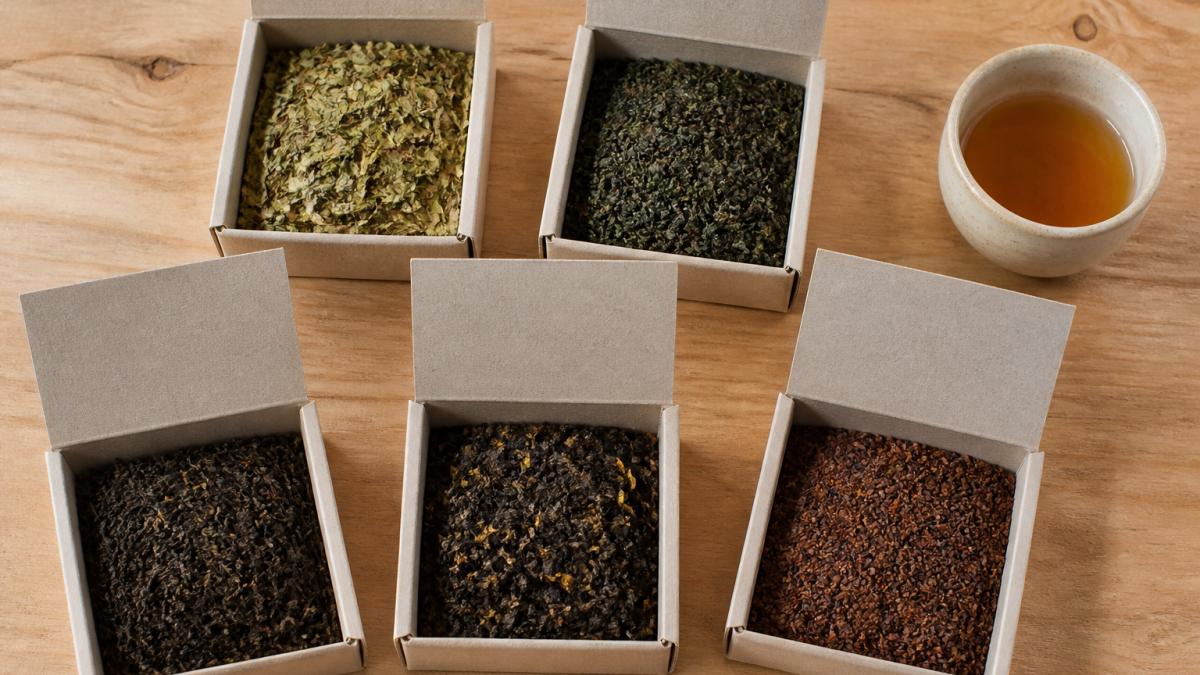
| Sampler Set | Price | What's Inside | Best For |
|---|---|---|---|
| Intro to Oolong Tea | $28.00 | 5 oolong samples, ~20 servings | Oolong-curious buyers |
| Connoisseur's Cup | $30.00 | Oolong, green, and white samples | Traditional palates |
| Extraordinary & Unusual | $32.00 | Oolong, black, green, and white samples | Adventurous menus |
| Sampler Set Intro | $22.00 | Entry-level assortment | First-time loose-leaf buyers |
Each set includes brewing instructions, which matters more than most buyers expect. Staff who know the water temperature and steep time for each blend sell it better and brew it more consistently.

How to Choose High Quality Loose Leaf Tea
Judging loose-leaf quality comes down to signals you can check without special equipment: leaf grade, aroma, freshness, and how the leaf behaves once it hits water. The last one is the most reliable, because it is the hardest to fake.
Start with your hands and nose before you brew. Whole leaves that feel pliable rather than brittle suggest careful handling through withering and rolling. Aroma should be clear and specific, not flat or dusty; a jasmine blend should smell like jasmine, a roasted oolong like toasted grain or cocoa, a black blend like malt or dried fruit. Then brew a small cup and watch the leaf unfurl. Intact leaves open gradually across steeps; broken leaf and fannings give up everything in the first pour and go flat on the second.
Reading the Leaf, the Liquor, and the Second Steep
- Leaf grade: Look for intact, uniformly sized leaves. Broken pieces brew faster but lose nuance, and they rarely reward a second steep.
- Aroma: Fresh tea smells like its named character. If the aroma is vague or papery, the leaf is likely old or low grade.
- Freshness: Check the harvest or packing date when it is printed. Older stock tastes muted regardless of grade.
- Liquor: Brew a small cup. Clear, bright color usually points to clean processing; cloudy or dull liquor can signal age or poor storage.
- Second steep: This is the tell. If the second cup is nearly as good as the first, you have whole leaf and a blend worth its price. If it collapses, you are paying premium pricing for a base that behaves like a commodity.
Blend-Level Tasting Notes: What to Compare Across Black, Green, Herbal, and Flavored
Most guides stop at leaf grade. The more useful comparison is blend by blend, because a supplier can be strong on one type and weak on another. When you evaluate a premium blend program, taste across categories and note aroma, body, flavor, and finish for each:
- Black blends: Look for malt, cocoa, or dried-fruit notes and a body that holds up with milk. A black blend that turns thin or bitter under milk will not work on a cafe menu.
- Green blends: Look for vegetal, chestnut, or grassy notes and a clean finish. Green tea is the least forgiving of stale stock, so freshness matters most here.
- Oolong blends: Look for a range from light and floral to roasted and toasty, and check how the flavor evolves across steeps. Oolong is where whole-leaf quality shows most clearly.
- Herbal blends: These carry no true tea leaf, so judge them on ingredient quality and balance. Whole dried flowers, fruit pieces, and spices read better than dust and should smell like what they are.
- Flavored blends: Ask what the flavor is built on. A flavored blend is only as good as its base leaf, and a natural flavor on a low-grade base still tastes like a low-grade base.
Brewing Guidance That Actually Changes the Cup
Water temperature and steep time do more to a cup than most buyers expect, and they differ by tea type. Rather than memorize fixed numbers, use the ranges the supplier prints on the package and adjust to taste, because leaf size and blend composition shift the right answer. As a general pattern: lighter and greener teas generally want cooler water and shorter steeps, while black and roasted oolong blends generally take hotter water and can stand a longer steep.
If a supplier will not tell you the harvest window, the origin garden, or the brewing range, treat that as a signal. Transparency about where leaves come from and how they should be brewed is the foundation everything else sits on, and it is the difference between a blend you can describe with confidence and one you have to hedge on.
Organic Tea Sourcing and Certification: What to Verify
Verification is where most buyers get lazy, and it's where the real difference shows up. Organic claims should be backed by certification you can check, not just a label on a box.
In the United States, organic tea falls under the USDA National Organic Program, which requires certified operations to meet production and handling standards and to keep an audit trail. You can read the program details through the USDA National Organic Program. Ask any supplier which certifier signed off and whether they'll share the certificate.
Fair-trade claims deserve the same scrutiny. Reputable programs publish their standards and audit supply chains, and you can review how fair-trade certification works through Fair Trade Certified standards. If a supplier talks about fair pay but can't point to a program or audit, that's marketing, not verification.
Natural Flavoring in Tea: Essential Oils vs. Artificial Additives
Natural flavoring in tea splits into two camps: pure essential oils and natural flavor essences on one side, synthetic additives on the other. The distinction matters to anyone with flavor sensitivities or a clean-label commitment.
Essential oils are distilled from plant material and carry the concentrated aroma of the source. Natural flavor essences are derived from plant or botanical sources as well, but they're processed into a stable, consistent form. Both differ from artificial additives, which are synthesized and can taste sharp or flat compared to the real thing.
What most guides miss is that "natural flavor" on a label is a broad legal category. It doesn't automatically mean essential oil. If your customers ask, the honest answer is to name which method the blender uses. We hand-blend using natural flavor essences and pure essential oils, with no artificial ingredients, and we say so plainly because buyers ask.
Price Per Serving: Why Premium Blends Cost More Than Tea Bags
Loose-leaf premium blends usually carry a higher sticker price than a box of tea bags, but the sticker price is not the number that decides your margin.
The mechanism is straightforward. A tea bag is portioned for you at a fixed weight, so every cup costs the same.
Here is how to run the comparison honestly, using figures you pull from the product page rather than from a competitor's marketing:
- Divide the package price by the number of servings the supplier lists. If the supplier lists grams instead of servings, use the brewing guidance on the package to estimate how many scoops the bag holds, and treat that estimate as approximate.
- Add a resteep multiplier only for tea types that actually support it. If you plan to resteep, count the second cup at a reduced value rather than a full one, since the second steep is usually lighter.
- Add your shipping cost per package, then divide by servings again. Shipping is the input most buyers forget, and it can move the per-cup figure more than the tea itself on small orders.
- Add the cost of your brewing method, amortized over its expected life. A strainer, pot, or filter bag is a one-time cost spread across hundreds of cups, so it is usually a rounding error, but it belongs in the math.
- Compare that final per-cup figure against your current bagged cost, and against the price you charge or the value you assign to the cup.
A common pattern among wholesale buyers is that the per-cup gap between a mid-tier bagged tea and a whole-leaf premium blend narrows sharply once resteeping and shipping are included, and can invert entirely on oolong and whole-leaf green.
Two cautions. First, do not compare a per-cup figure from one supplier against a per-ounce figure from another; convert both to per-cup before you decide.
Tea bags still win on convenience, portion control, and speed at the counter. Loose leaf wins on flavor depth, resteep value, and the origin story you can tell customers.
Matching Premium Blends to Your Buyer: Cafes, Spas, and Gift Shops
The right premium blends depend on who's drinking them. A cafe needs approachable, consistent blends that hold up with milk and fast service. A spa wants calming, aromatic options that fit a slower ritual. A gift shop needs packaging and variety that sell themselves off a shelf.
For buyers new to loose leaf, sampler sets solve the intimidation problem. The Connoisseur's Cup walks a beginner through oolong, green, and white teas in one box, while the Extraordinary & Unusual set leans into bolder, less familiar profiles.
Wholesale partners should ask about minimums and restock speed up front. Low minimums matter for boutiques testing a new line, and quick restocking matters when a bestseller sells out mid-season.
Choosing a tea supplier is really a decision about what you can stand behind when a customer asks where their cup came from.
Frequently Asked Questions
What should you compare when choosing an alternative to Arbor Teas?
Focus on four things: leaf grade and freshness, verified organic certification, how flavor is added (natural essences versus artificial additives), and price per serving. Request the certification body's name and check the harvest or packaging date. A sampler set lets you judge aroma, body, and flavor across several premium blends before committing to full-size tins.
How can you verify organic claims on tea packaging?
Look for a USDA organic seal and the name of the certifying agent on the package. USDA certified organic means the tea was grown without prohibited synthetic pesticides and processed under verified conditions. If a brand cannot name its certifier or show a certificate on request, treat the organic claim as unverified and ask for documentation before buying in volume.
What makes a tea blend premium?
Premium blends use whole-leaf or hand-rolled tea, clear tasting notes, and short ingredient lists. They name the estate or region, carry a verifiable organic certification, and use natural flavor essences or pure essential oils rather than artificial additives. Freshness matters too: whole leaves hold aroma longer than broken fannings, so the cup tastes fuller and sweeter.
Are estate-grown teas better than blended teas?
Neither is automatically better. Estate-grown teas show a single garden's character, which suits drinkers who want to taste one origin clearly. Blended teas combine leaves or add natural flavor essences to create a consistent cup, which suits cafes and gift shops that need repeatable results. Judge both by leaf quality, freshness, and whether the flavoring is natural.
How do I know which premium blends will sell in my shop or cafe?
Start with a sampler set to test demand before ordering full cases. Track which samples customers ask about by name, then reorder those. Many buyers begin with approachable oolong and green tea blends and expand into more unusual selections once regulars trust the quality. Low wholesale minimums make this testing affordable.


Octavia Tea Sign In
Create New Account