


How to Dispose of Used Tea Leaves the Eco-Friendly Way

Last Updated: October 26, 2026
Quick Summary
Compost used tea leaves at home, work them into garden soil as organic matter, or check whether your local food-waste program accepts them. Loose leaves are simple to handle, but sort tea bags by component first: paper bags can be composted, while plastic mesh bags go in the trash.
- Drain and cool leaves, then spread them out for an hour before composting.
- Check your municipality's accepted-materials list before adding tea leaves to a curbside bin.
- Tear a bag's corner: paper tears raggedly, plastic mesh stretches and resists tearing.
- Remove strings, tags and staples from tea bags and sort each component separately.
- Leaves add organic matter that improves soil structure but do not replace fertilizer.
Table of Contents
- Why Used Tea Leaves Deserve a Second Life
- How to Compost Tea Leaves at Home
- Used Tea Leaves for Plants and Garden Soil
- Can You Put Tea Leaves Down the Garbage Disposal?
- How to Reuse Loose Leaf Tea Before You Toss It
- Tea Bags vs. Loose Leaves: What Goes Where
- Your Next Cup, Your Next Step
- Frequently Asked Questions
I actually get this question a lot from customers. Often times people will use their coffee grounds in their garden and so the question around tea leaves is often asked as well. I think its a great question and a great idea. I want to quickly outline some things to think about and encourage you to also try this out! Let us know how your plants like it.
Why Used Tea Leaves Deserve a Second Life
Most people finish a cup of tea and send the leaves straight to the trash without a second thought. Used tea leaves are organic matter that can be considered for garden or compost use.
Below, we'll cover ways to dispose of used tea leaves, including composting and garden use. Tea bags and loose leaves may need different handling.
We'll also cover habits to consider when disposing of used tea leaves.
How to Compost Tea Leaves at Home
A household steeping a few cups a day produces a small volume that a backyard bin handles easily. A cafe or a heavy tea drinker generating quarts of wet leaves daily can overload a small pile; in that case, spread the leaves across a larger browns layer, compost in a tumbler that is turned more often, or route the excess to municipal food-waste collection if your area offers it.
Checking Local Rules Before You Compost
Accepted materials vary by municipality, and the rules that apply to yard waste do not always match those for food scraps. Before you add tea leaves to a curbside bin, check three things: whether food scraps are accepted at all, whether tea bags are allowed (many programs accept loose leaves but reject bags), and whether the program requires certified compostable liners or specific bin types. Your city or county waste department publishes an accepted-materials list, and it is worth reading once rather than guessing. If you compost at home, the same logic applies at a smaller scale: keep the pile balanced, keep it turned, and keep out anything that will not break down.
Preparing Leaves Before They Hit the Bin
Drain and cool the leaves before they go in. Hot, dripping leaves raise the moisture level of the pile and push it toward the anaerobic conditions described above. Spread them on a plate or tray for an hour to shed surface water, then mix them in. If you are storing spent leaves for a few days until compost day, keep them dry and loosely covered so they do not mold; a sealed tin works well for this, and our Washi Tea Tin is sized for exactly that kind of short-term holding.
Used Tea Leaves for Plants and Garden Soil
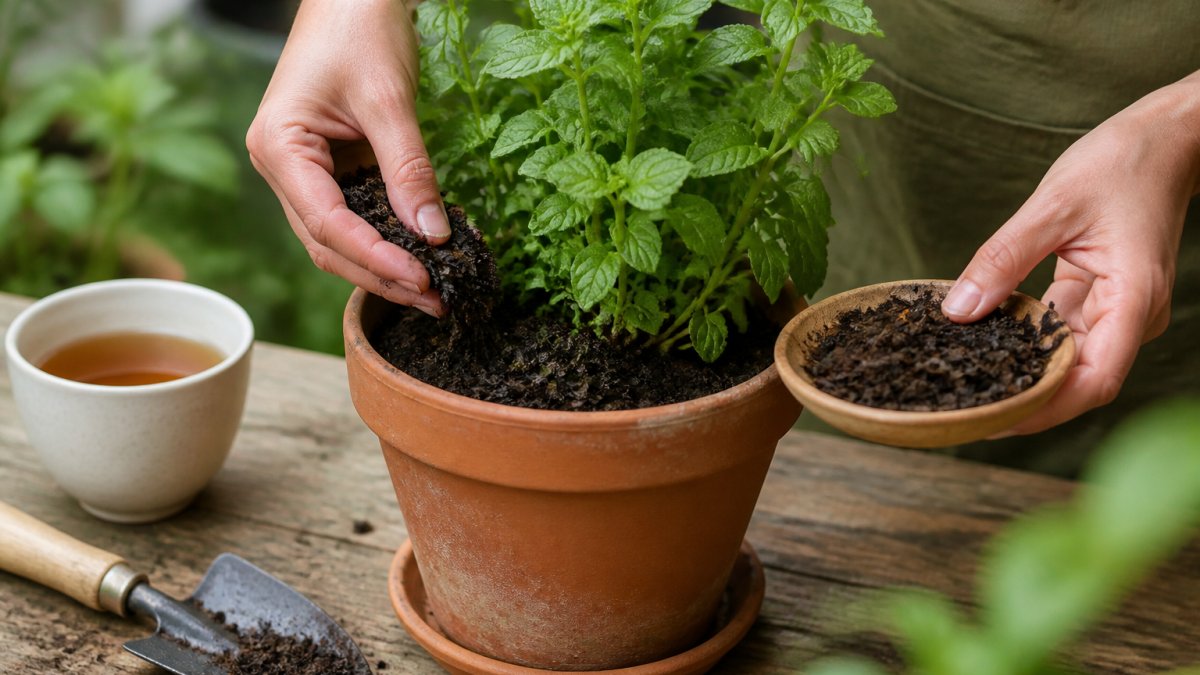
The leaves add organic matter, which improves soil structure over time. They are not a fertilizer replacement, so pair them with your normal soil care.
Can You Put Tea Leaves Down the Garbage Disposal?
If a few leaves slip down, run cold water and avoid dumping more. The occasional stray leaf is not a crisis. A habit of dumping whole infusers is.
How to Reuse Loose Leaf Tea Before You Toss It
If you want to get the most from every leaf, start with quality. Our organic loose leaf tea picks guide walks through choosing and storing leaves so they hold up to multiple infusions. A glass teapot with a roomy infuser basket gives leaves space to expand, which helps them release flavor evenly across steeps.
Tea Bags vs. Loose Leaves: What Goes Where
Loose leaves are the simple case: they are plant material, and they can go to compost, garden soil, or trash depending on what you have available. Tea bags are the complicated case, because a single bag can contain four or five different materials, the leaf, the bag itself, a string, a tag, and a staple, and each one has a different end-of-life. Sorting by component is the only reliable approach.
Identifying What Your Bag Is Made Of
Start with the bag material. Plain paper bags feel like thin, matte paper, tear easily, and usually have folded or crimped edges. Plastic mesh bags feel silky or slippery, have a slight sheen, and often show heat-sealed edges where the mesh is fused rather than folded. A simple test: tear a corner. Paper tears raggedly and leaves a fibrous edge; plastic mesh stretches, resists tearing, and leaves a fused or stringy edge. If the bag is described as "biodegradable" or "compostable" on the box, read the fine print, some materials need industrial composting conditions that a backyard pile cannot reach, and "biodegradable" alone does not guarantee home compostability. Similar scrutiny applies to the complex materials found in composting coffee pods, which often require a more nuanced understanding of material breakdown than simple tea leaves.
Sorting by Component
Component | How to Identify It | Where It Goes |
|---|---|---|
Loose leaves | No bag at all | Compost, garden soil, or trash |
Paper tea bag | Matte, tears raggedly, folded or crimped edges | Compost with the leaves |
Plastic mesh bag | Silky, sheen, heat-sealed edges, stretches when torn | Trash only |
String and tag | Paper tag on a cotton or synthetic string | Remove; compost paper tag, trash synthetic string |
Staple | Small metal staple | Remove and trash or recycle with metals |
Individual wrapper | Foil or plastic film | Trash, or recycle only if your program accepts the material |
A Simple Decision Path
For a deeper look at how leaf size and brewing differ between formats, our guide on loose leaf tea vs tea bags covers the health and brewing side. If cost is your concern, this breakdown of organic loose leaf tea vs tea bags compares cost per cup and quality.
Your Next Cup, Your Next Step
At Octavia Tea, we offer over 120 organic loose leaf teas sourced direct from estate gardens. Our teas are USDA certified organic, hand-blended with natural flavor essences and pure essential oils, and free of artificial ingredients. Retail orders over $65 ship free.
Get started with Octavia Tea.
Frequently Asked Questions
Can you put tea leaves down the garbage disposal?
It is better not to. Used tea leaves absorb water and clump together, and a large handful can clog the trap or dull the disposal blades over time. A small amount rinsed down with plenty of running water is usually fine, but the safer habit is to strain leaves out with a sink strainer and send them to the compost or trash. Never pour loose leaves down the drain without a strainer.
Which tea bags can be composted?
Check the bag itself before composting. Many conventional tea bags contain polypropylene plastic, which does not break down, and some are stapled or have a plastic tag string. Paper bags with no plastic mesh, staples, or synthetic string can go into compost once you empty the leaves. If you are unsure, tear the bag open, compost the leaves, and put the bag in the trash.
Are used tea leaves good for garden soil?
Yes, in moderation. Spent leaves add organic matter and slowly release nutrients as they break down, and they can be worked into the top layer of soil or added to a mixed compost heap. Spread them thin rather than in thick piles, which can mat down and hold moisture. Cooled, drained leaves are also a mild addition to worm bins and around acid-loving plants.
How should you dispose of tea leaves if you do not have a compost bin?
Let the leaves drain and cool, then choose the simplest option that fits your household. Many municipal food-waste or yard-waste collection programs accept tea leaves and paper tea bags, so check your local rules first. Otherwise, spread a small amount around outdoor plants, or seal cooled leaves in a trash bag for household waste. Avoid the sink, and never flush leaves down the toilet.


Octavia Tea Sign In
Create New Account