


Premium Black Tea: 2026 Guide to Grades & Origins

Table of Contents
- What Makes Premium Black Tea Worth the Price
- Black Tea Grades Explained: What the Letters Actually Mean
- Black Tea Origins and Flavor: From Assam to Yunnan
- How to Choose High-Quality Black Tea in Five Minutes
- Why Organic Black Tea Costs More and Delivers More
- Brewing Premium Black Tea: Times, Temperatures, and Milk
- Storing Premium Black Tea So It Stays Fresh
- Conclusion
- Frequently Asked Questions
Last Updated: October 9, 2026
We're very picky about the black tea we use and sell. If you're drinking black tea on its own, it has to be amazing on its own, and if it's going into a blend, we want that same flavor in every cup. Black tea is so common that it's easy to grab any bag, but we taste everything and only source from estates we trust to deliver. Customers tell us they can taste the difference, and we think that's because we're so picky. It's also the reason we're sometimes out of stock: we won't compromise on quality. Here's how we think about black tea, so you can judge it for yourself.
Here is what we mean by premium.
What Makes Premium Black Tea Worth the Price
Premium black tea is loose-leaf tea made from whole, carefully graded leaves harvested at peak season, processed by hand or in small batches, and sold within months of harvest rather than years. At Octavia Tea, we source directly from estate gardens, and the price gap on the shelf almost always reflects leaf grade, harvest timing, and freshness, not marketing.
The leaf itself is only half the story: a premium black tea can still taste flat if it sat in a warehouse for eighteen months or was over-steeped.
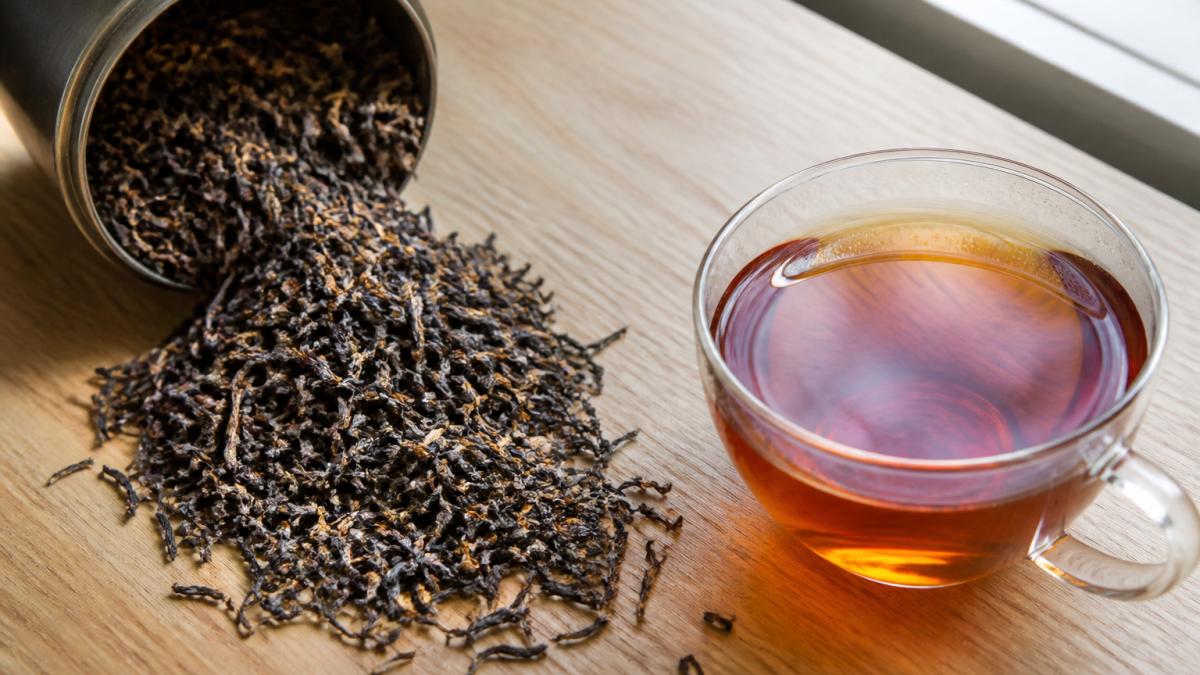
Black tea and a cup of tea ready to drink
Black Tea Grades Explained: What the Letters Actually Mean
Black tea grades follow a simple system: whole-leaf grades rank above broken-leaf grades, which rank above dust and fannings. The letters on packaging (FTGFOP, SFTGFOP, BOP) describe leaf size and tip content, not flavor directly, but they are a reliable proxy for how much care went into production.
In the Indian and Sri Lankan orthodox system, the highest whole-leaf grade is SFTGFOP. Chinese teas like Keemun and Yunnan use different grading. This can be confusing even to us but once you understand it in more detail it makes sense.
The main whole-leaf grades, from finest to most common:
- SFTGFOP (Special Finest Tippy Golden Flowery Orange Pekoe): the highest whole-leaf grade, heavy in golden tips
- FTGFOP (Finest Tippy Golden Flowery Orange Pekoe): excellent quality, abundant tips
- TGFOP (Tippy Golden Flowery Orange Pekoe): good quality with visible tips
- FOP (Flowery Orange Pekoe): solid everyday whole-leaf grade
- BOP (Broken Orange Pekoe): broken leaves, faster and stronger brew, common in tea bags
A common mistake is assuming more letters means better taste. Grade describes the leaf, not the cup: a well-made BOP from a great estate can outperform a poorly stored SFTGFOP.
Black Tea Origins and Flavor: From Assam to Yunnan
Origin shapes flavor: elevation, soil, and climate shape the cup as much as processing does. Five regions dominate the premium market, each with a distinct profile.
Assam (northeastern India, low elevation, hot and humid) yields bold, malty, full-bodied teas built for milk and sugar. Darjeeling (Himalayan slopes, high elevation) produces lighter, muscatel-toned teas often called the "Champagne of teas," best drunk without milk. Yunnan (southwestern China) gives rich, peppery, cocoa-tinged teas from ancient tea trees. Keemun (Anhui, China) is smoother and more floral, with a wine-like depth. Ceylon (Sri Lanka) is brisk, bright, and citrusy, a classic for iced tea and breakfast blends.
Earl Grey is not an origin at all. It is a flavored blend, traditionally black tea scented with bergamot oil. Breakfast blends like English Breakfast combine Assam, Ceylon, and sometimes Keemun for a rounded, milk-friendly cup.
Origin | Flavor Profile | Best Served |
|---|---|---|
Assam | Malty, bold, full-bodied | With milk |
Darjeeling | Muscatel, floral, delicate | Plain |
Yunnan | Peppery, cocoa, ripe fruit | Plain or light milk |
Keemun | Smooth, floral, wine-like | Plain |
Ceylon | Brisk, bright, citrusy | Iced or with milk |
Tea Association of the USA overview of tea types and processing
How to Choose High-Quality Black Tea in Five Minutes
You don't need a tasting table to judge black tea. Use a repeatable checklist instead of hunting for one signal. "Premium" on a label is a marketing word and means nothing by itself; quality is the sum of six variables you can inspect: leaf grade, harvest timing, origin specificity, processing method, freshness, and traceability.
Start with leaf grade, the fastest filter. Whole-leaf and tippy grades (the FOP family) generally indicate gentler handling through withering, rolling, and drying, while broken grades and fannings are engineered for fast extraction in bags.
Processing method is easy to overlook. Orthodox production, leaves rolled whole and oxidized slowly in controlled rooms, preserves leaf integrity and produces layered flavor. CTC (crush-tear-curl) production shreds the leaf into uniform pellets for rapid extraction, which is why it dominates tea bags.
Here is how the six variables stack up when you are standing in the aisle:
Variable | Strong Signal | Weak Signal |
|---|---|---|
Leaf grade | Whole leaf, visible golden tips | Dust, uniform tiny fragments |
Harvest | Flush or plucking season stated | No date at all |
Origin | Named estate or region | "Blended in" or country only |
Processing | Orthodox, oxidation level noted | CTC pellets, no method stated |
Freshness | Harvest date within the last year is ideal | Best-by date only |
Traceability | Verifiable certificate or estate | Unverifiable "natural" claims |
A quick sensory pass reinforces the paperwork. Fresh dry leaf smells sweet, floral, or malty; stale leaf smells like cardboard or hay. Whole leaves feel slightly crisp, not brittle and powdery. Sellers may not always list the harvest dates but you are always free to ask. On our finer teas we are asked this from time to time. In general Octavia Tea turns over a lot of tea, we keep our inventory fresh and again this is why from time to time we do not skimp on quality and may have temporary outages.
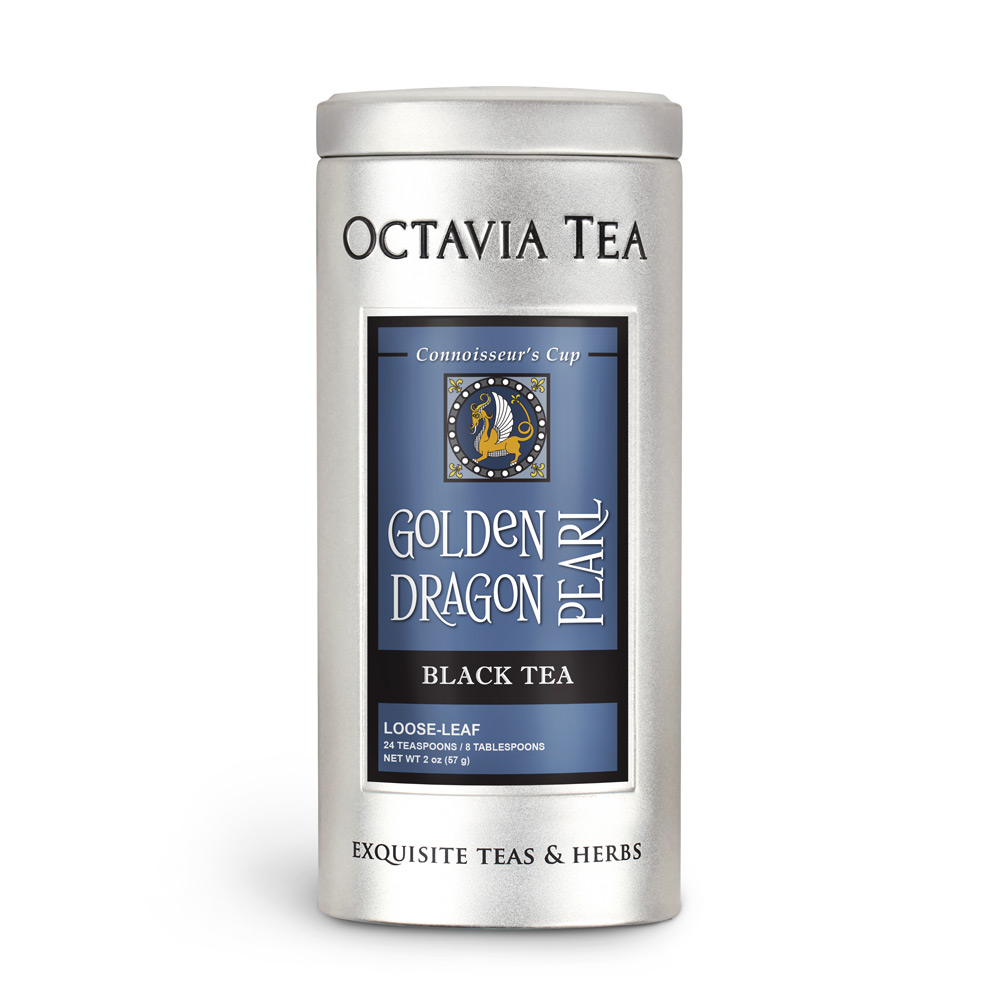
Our Golden Dragon Pearl is a good example of what to look for: hand-rolled pearls made from golden leaf-tips that unfurl in the cup, with notes of chocolate, fig, and honey. The pearls themselves are the quality signal, whole, tippy, and traceable to a single garden.
Why Organic Black Tea Costs More and Delivers More
Organic black tea costs more because certified organic farming avoids synthetic pesticides and fertilizers, which typically lowers yield per acre and raises labor costs. You are paying for a slower growing method and for third-party verification that the farm followed it.
Certification matters more than marketing. In the United States, the USDA National Organic Program sets the standard, and certified operations are inspected annually. A tea labeled "natural" or "pure" without a certification mark has not been verified by anyone, so treat the words as marketing, not certification.
There is also a flavor argument: teas grown without synthetic inputs are often described by growers and enthusiasts as more complex and layered, though flavor also depends heavily on cultivar, terroir, and processing. We hand-blend our teas using only natural flavor essences and pure essential oils, so the base leaf quality has nowhere to hide which again why we are so picky.
USDA National Organic Program standards and certification
Brewing Premium Black Tea: Times, Temperatures, and Milk
Brewing premium black tea correctly means matching water temperature, leaf-to-water ratio, and steep time to the specific tea in front of you, not applying one rule to every black leaf. Hot water extracts soluble compounds in a predictable order, bright aromatics and sweetness first, then body and tannins.
Use these starting ranges and adjust to taste:
Tea Type | Water Temperature | Leaf-to-Water | Steep Time | Re-steep? |
|---|---|---|---|---|
Assam / breakfast blends | 200-212°F | about 1 tsp per 8 oz | 3-5 min | Yes, 1-2 times |
Darjeeling (first flush) | 185-195°F | about 1 tsp per 8 oz | 2-3 min | Yes, 1-2 times |
Yunnan / Keemun | 195-205°F | about 1 tsp per 8 oz | 3-4 min | Yes, 2-3 times |
Ceylon | 200-212°F | about 1 tsp per 8 oz | 3-4 min | Yes, 1-2 times |
Pearl-style (hand-rolled) | 200-212°F | 3-6 pearls per 8 oz | 3-4 min | Yes, 2-3 times |
Broken-leaf / bagged | 200-212°F | 1 bag or 1 tsp per 8 oz | 2-3 min | Usually no |
A few mechanics worth knowing. Pre-warm your cup or pot with hot water and discard it before brewing; a cold vessel drops the water temperature on contact and throws off your steep. Use fresh, filtered water, since chlorine and heavy minerals flatten aroma.
Milk is a flavor decision, not a rule. Bold, malty teas like Assam and breakfast blends stand up to milk because their tannin structure cuts through the fat; delicate first-flush Darjeeling and lighter Keemun are overwhelmed by it, so drink those plain.
Re-steeping is where whole-leaf tea earns its price. Because the leaf is intact, it releases flavor gradually across multiple infusions rather than dumping everything in the first steep. A good whole-leaf tea often gives two to three solid cups from the same leaves, lowering the effective cost per cup well below a bagged equivalent.
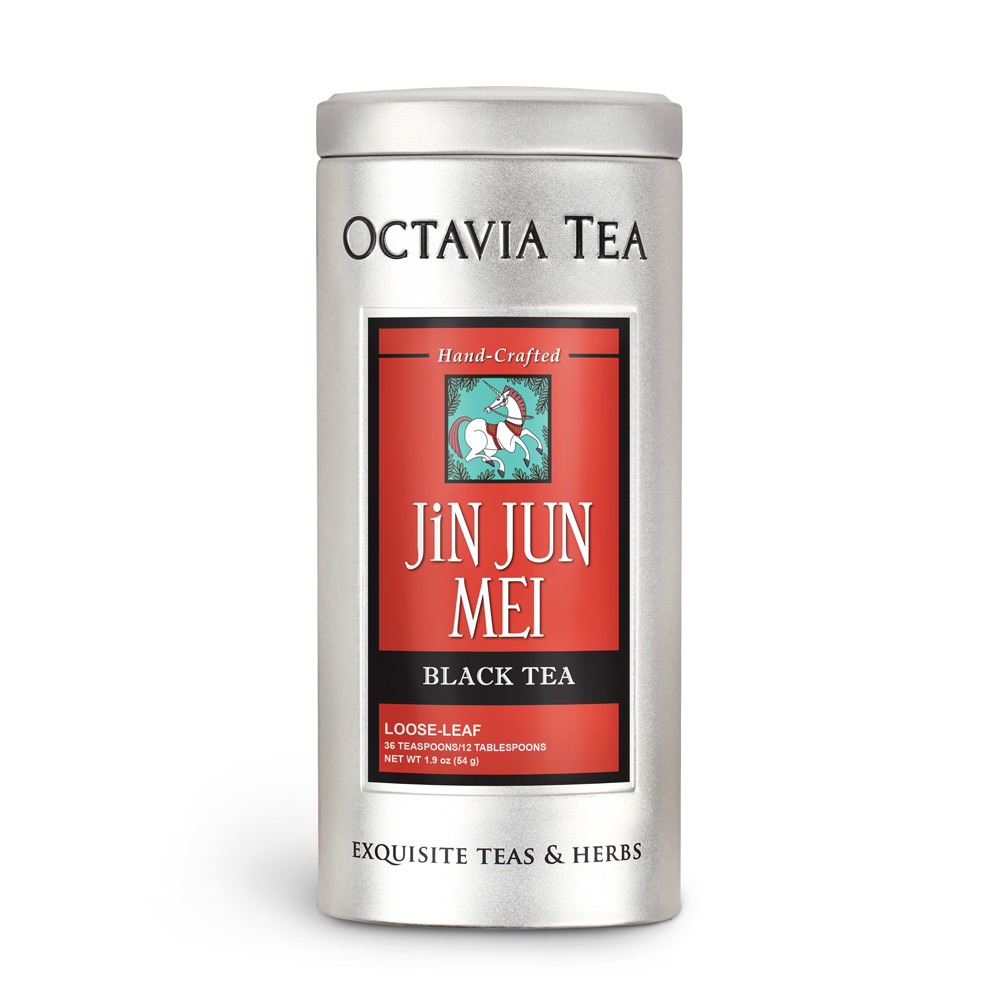
For a tea like our Jin Jun Mei, a malty spring-harvested black with notes of barley, honeyed butter, and a hint of smoke, use water at the higher end of the range and steep about four minutes. The velvety texture is the point, and over-steeping dulls it. Check the product page for the grower's specific parameters, since harvest and processing vary year to year.
Storing Premium Black Tea So It Stays Fresh
Four things degrade black tea: air, light, heat, and moisture. Black tea is more forgiving than green tea, but it still fades. A tin left open on a sunny counter will taste dull within a few months.
The practical routine:
- Keep tea in an airtight, opaque container, not the original paper bag
- Store it away from the stove, the windowsill, and the dishwasher
- Keep it away from strong-smelling spices and coffee, which it absorbs
- Buy in quantities you will drink within about six months
- Never refrigerate or freeze loose-leaf tea unless it is vacuum-sealed
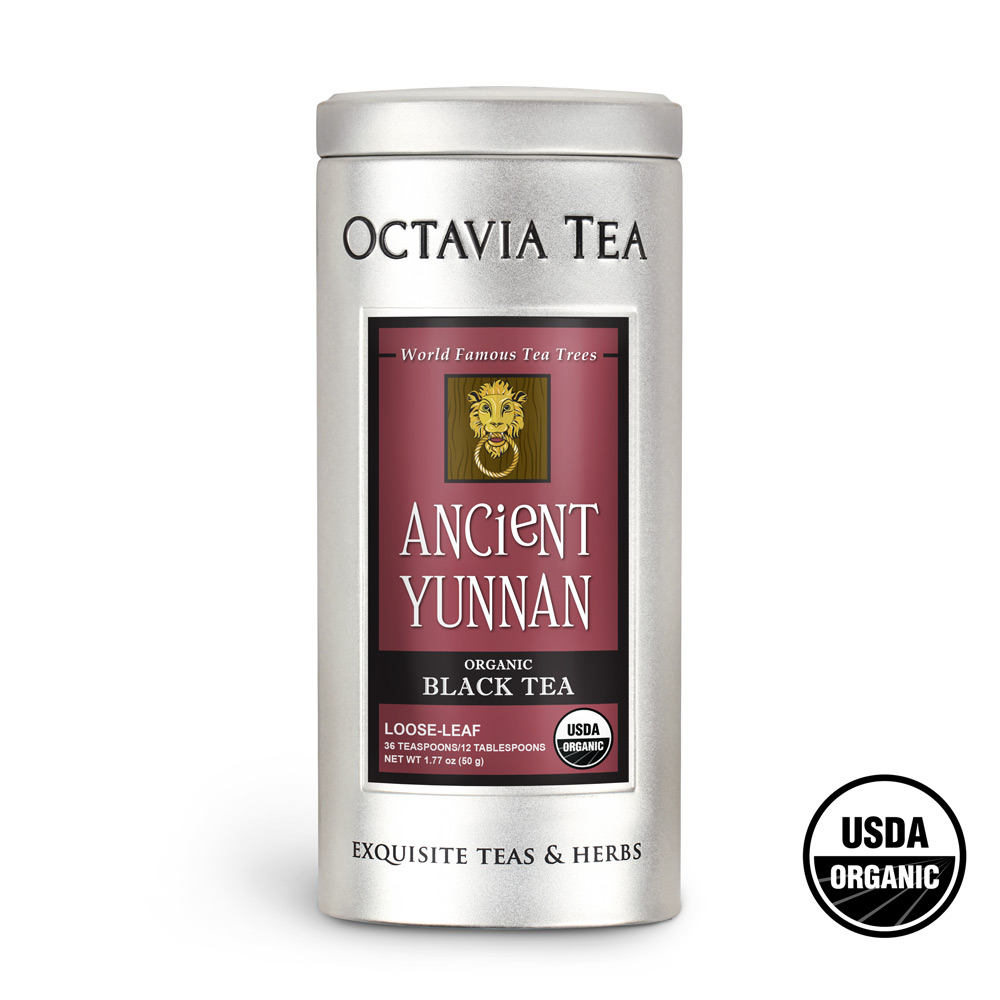
If you buy a large quantity, split it: keep a small amount in your daily tin and the rest sealed in a cool, dark cupboard. Our teas ship in tins for exactly this reason, and a properly stored Ancient Yunnan, with its notes of ripe fruit, cedarwood, and cocoa, holds its character far longer than a bagged equivalent.
Conclusion
The hardest part of buying premium black tea is that quality is mostly invisible until you brew it, and by then you have already paid. Learn the grades, know the origins, check for organic certification, and store what you buy properly, and you stop guessing. Octavia Tea carries over 120 organic loose-leaf teas sourced directly from estate gardens, USDA certified organic and hand-blended with natural flavor essences and pure essential oils, with free domestic shipping on retail orders over $65. Start with a single estate tea like our Darjeeling Reserve and taste the difference a fresh, well-sourced leaf makes.
Frequently Asked Questions
What is the highest grade of black tea?
We have to be careful, because remember the grading systems differ by country. In orthodox black tea, whole-leaf grades like FTGFOP (Finest Tippy Golden Flowery Orange Pekoe) indicate a high proportion of young buds and tips, which usually means more flavor and aroma. In China, Golden Dragon Pearl is an example of what a careful, tip-rich hand-rolled tea looks like. Grade tells you about leaf style, not whether the tea was grown organically or harvested at peak season, so treat it as one signal among several.
How can you tell if black tea is high quality?
Look at the dry leaf first: whole, unbroken leaves with visible golden or silver tips signal careful handling. Smell the dry tea, then the wet leaf after steeping. Premium black tea should smell sweet, malty, or floral, never dusty or flat. Taste a plain sip before adding milk or sugar. A clean, lingering finish with no harsh bitterness points to quality. Finally, check the package for an origin, a harvest date, and a USDA organic seal, which together indicate a producer willing to be transparent.
Is loose-leaf black tea better than tea bags?
Loose-leaf tea generally gives you more flavor per cup because the leaves are larger and have room to unfurl, releasing more aroma and body. Tea bags often contain fannings, which are small particles that steep fast but go bitter quickly. If you drink black tea daily, loose-leaf also lets you adjust the amount to suit your taste and the size of your pot. It costs more per package, but you can often re-steep the same leaves, which brings the price per cup closer.
How much caffeine is in premium black tea?
An 8-ounce cup of black tea typically contains about 40 to 70 milligrams of caffeine, depending on the leaf, the amount you use, and how long you steep it. That is roughly half the caffeine of a standard cup of coffee. Whole-leaf teas may release caffeine more gradually than broken leaves, so the lift may feel steadier. If you are sensitive to caffeine, shorten the steep time or use fewer leaves rather than switching to a different kind of tea, such as green tea or a caffeine-free herbal


Octavia Tea Sign In
Create New Account