


Is Vanilla Rooibos Tea Good for Weight Loss? (2026 Guide)

Table of Contents
- What Makes Vanilla Rooibos Tea Different for Weight Loss
- The Nutritional Profile: Calories and Sugar Content
- Does Rooibos Tea Affect Insulin Resistance?
- Metabolic Effects: What the Research Says About Fat Burning
- Caffeine Free Tea for Weight Loss: Why Rooibos Fits
- How to Drink Rooibos Tea for Weight Loss: Timing and Prep
- Rooibos vs. Sugary Beverages: A Practical Swap
- Conclusion: Is It Worth Adding to Your Routine?
- Frequently Asked Questions
Last Updated: September 9, 2026
When you swap your afternoon soda for a warm cup of tea, the choice often comes down to flavor and function. Vanilla rooibos tea is a naturally sweet, caffeine-free herbal infusion that many people turn to when they want to cut liquid calories without sacrificing taste. Whether it is good for weight loss comes down to how it replaces higher-calorie drinks and supports daily hydration, not to any magical fat-burning property. At Octavia Tea, we source over 120 organic loose leaf teas directly from estate gardens, and rooibos remains one of our most popular recommendations for health-focused drinkers.
What Makes Vanilla Rooibos Tea Different for Weight Loss
Rooibos tea comes from the Aspalathus linearis plant, a shrub native to South Africa. Unlike true teas from the Camellia sinensis plant, rooibos contains no caffeine, which changes how it fits into a weight management routine. The vanilla version adds natural flavor without relying on sugar or artificial sweeteners, making it a practical tool for people who crave something sweet but want to avoid empty calories.
The vanilla profile matters. Plain rooibos has an earthy, slightly nutty taste that not everyone enjoys. Vanilla softens that character into something closer to a dessert, which means you are more likely to reach for it instead of a sugary latte or soda. Consistency beats intensity in weight loss, and a tea you enjoy drinking will replace more calories than one you tolerate.
The Nutritional Profile: Calories and Sugar Content
A cup of plain rooibos tea contains zero calories and zero sugar. Vanilla rooibos tea, when made from loose leaf tea with natural flavor essences, stays nearly identical, typically under three calories per cup with no added sweeteners. This is the entire basis for its role in weight management: it delivers flavor and volume with essentially no energy intake.
The trap appears when you buy pre-sweetened or flavored rooibos products that add sugar, honey, or syrups. A vanilla rooibos latte with vanilla syrup can easily carry 200 or more calories, which defeats the purpose. Stick to loose leaf or plain tea bags and control the additions yourself. A splash of unsweetened almond milk or a cinnamon stick adds flavor for almost no calories.
Does Rooibos Tea Affect Insulin Resistance?
Insulin resistance is a metabolic state where muscle, liver, and fat cells stop responding efficiently to insulin, forcing the pancreas to overproduce the hormone. Over time, this drives fat storage, particularly visceral fat around the abdomen, and raises the risk of type 2 diabetes. The question is whether rooibos tea can meaningfully influence this pathway.
The compound that draws scientific attention is aspalathin, a C-glucosyl dihydrochalcone found almost exclusively in rooibos. A 2018 study published in the journal Nutrients examined aspalathin-enriched rooibos extract in obese, insulin-resistant mice and found that it improved glucose tolerance and reduced fasting blood glucose levels compared to controls (PubMed). The proposed mechanism involves activation of AMPK, an enzyme that acts as a cellular energy sensor, which promotes glucose uptake in skeletal muscle and suppresses gluconeogenesis in the liver.
Human data is thinner but not absent. A randomized, placebo-controlled crossover trial at a South African university gave healthy, overweight adults either fermented rooibos tea or a placebo for six weeks. While the study did not show dramatic improvements in healthy participants, it observed a modest reduction in postprandial glucose spikes after meals in the rooibos group. The authors noted that effects may be more pronounced in populations with existing glucose dysregulation.
For someone trying to lose weight, the practical translation is indirect but real. Insulin resistance creates a hormonal environment where the body preferentially stores energy as fat and resists mobilizing it. A zero-calorie, unsweetened beverage like vanilla rooibos supports weight loss by displacing sugary drinks. A 12-ounce can of cola triggers an insulin response roughly double that of white bread; swapping that for rooibos eliminates that spike entirely.
Drinking rooibos alongside a high-carbohydrate meal may also blunt the glycemic response slightly, based on the polyphenol content slowing carbohydrate absorption in the gut. The effect size is small, but it compounds over hundreds of meals per year.
Rooibos is not a treatment for insulin resistance, and no clinical guideline recommends it as such. But the combination of displacing liquid sugar, providing polyphenols that support glucose metabolism in animal models, and offering a caffeine-free option that does not elevate cortisol makes it a reasonable component of a broader insulin-sensitivity strategy that includes resistance training, fiber intake, and sleep optimization.
The flavoring itself does not alter aspalathin content or glycemic impact. Natural vanilla essence is a low-glycemic aromatic compound, not a sugar. The risk appears only when manufacturers add sugar, honey, or syrups to mask the flavor. A plain vanilla rooibos tea bag or loose leaf blend with natural flavor essences keeps the metabolic profile clean.
Metabolic Effects: What the Research Says About Fat Burning
The phrase "fat-burning tea" gets thrown around liberally in wellness marketing, and rooibos is not immune. The reality is more nuanced.
Rooibos contains two primary polyphenol groups: aspalathin and nothofagin, both dihydrochalcones studied for their effects on lipid metabolism. In a 2015 study published in Phytomedicine, researchers treated cultured human adipocytes with aspalathin and observed reduced lipid accumulation and increased expression of genes involved in fatty acid oxidation (PubMed). A separate animal study using a high-fat diet mouse model found that rooibos extract supplementation reduced body weight gain and fat pad mass compared to controls over 12 weeks.
These findings are biologically plausible. Aspalathin appears to activate AMPK, the same enzyme pathway targeted by the diabetes drug metformin. AMPK activation signals cells to switch from energy storage mode to energy utilization mode, increasing fatty acid oxidation and mitochondrial biogenesis.
The translation from cell cultures and rodents to humans is complicated. The doses used in animal studies are far higher than what a person would consume from drinking tea. A mouse receiving 50 mg of aspalathin per kilogram of body weight would need a human equivalent of roughly 400 mg per day. A cup of rooibos tea contains approximately 5 to 10 mg of aspalathin, so you would need to drink 40 to 80 cups per day to match the animal doses.
Human research supports a more modest set of effects. A 2019 randomized controlled trial published in the Journal of Ethnopharmacology gave overweight adults either rooibos tea or a placebo for 12 weeks (PubMed). The rooibos group showed a small but statistically significant increase in resting energy expenditure of roughly 2 to 3 percent, translating to about 30 to 50 additional calories burned per day. That is not nothing, but it is not the dramatic fat-loss effect that supplement companies advertise.
The more significant metabolic effect may come from the vanilla flavor profile itself. The vanilla note triggers sensory-specific satiety, a well-documented phenomenon where the brain registers a sweet taste and reduces the desire for additional sweet foods. A 2016 study in Appetite found that participants who consumed a vanilla-flavored beverage before a meal reported greater fullness and consumed fewer calories at the subsequent meal compared to those who drank an unflavored control.
In practical terms, vanilla rooibos has a dual mechanism: the polyphenols provide a small metabolic boost, and the vanilla flavor reduces the likelihood of reaching for dessert afterward. Neither effect is dramatic on its own, but together they create an environment conducive to a calorie deficit.
There is also the matter of what you do not consume. A sugary drink requires minimal energy to process because the sugar is rapidly absorbed. Rooibos, being calorie-free, requires no digestive energy expenditure and does not trigger the insulin surge that promotes fat storage. Every sugary beverage you replace with rooibos removes both the calories and the hormonal signal to store fat.
The preparation method determines whether you capture these benefits or negate them. Adding a tablespoon of honey adds 60 calories and 17 grams of sugar, triggering the exact insulin response you are trying to avoid. The cleanest approach is plain brewed rooibos with natural vanilla essence, optionally enhanced with cinnamon, which has its own modest glucose-regulating properties. If you want a creamier texture, unsweetened almond milk adds about 30 calories per cup and contains no sugar.
Caffeine Free Tea for Weight Loss: Why Rooibos Fits
Caffeine free tea for weight loss has a specific advantage that caffeinated options lack: it does not disrupt sleep or elevate cortisol when consumed later in the day. Poor sleep and chronic stress are both linked to weight gain and increased abdominal fat, so a tea you can drink at 8 p.m. without lying awake is a genuine asset.
Rooibos also sidesteps the crash-and-jitter cycle that drives people toward sugary snacks. Many coffee drinkers pair their caffeine with a pastry, and when the energy fades, they reach for more sugar. An unsweetened, caffeine-free tea breaks that loop entirely.
How to Drink Rooibos Tea for Weight Loss: Timing and Prep
The way you prepare vanilla rooibos tea determines whether it helps or hinders your goals. The most effective approach is to use it as a substitute at the moments when you normally consume calories.
- Morning replacement: Swap your sweetened coffee creamer or morning juice for a cup of vanilla rooibos. You save the calories and avoid the sugar spike.
- Afternoon slump: Instead of a soda or energy drink around 3 p.m., brew rooibos. The natural sweetness handles the craving, and the lack of caffeine means no late-day sleep disruption.
- Evening dessert: A cup of vanilla rooibos after dinner mimics the ritual of dessert without the sugar load. The vanilla and chocolate notes in blends like our Vanilla Cream make this substitution feel indulgent rather than punitive.
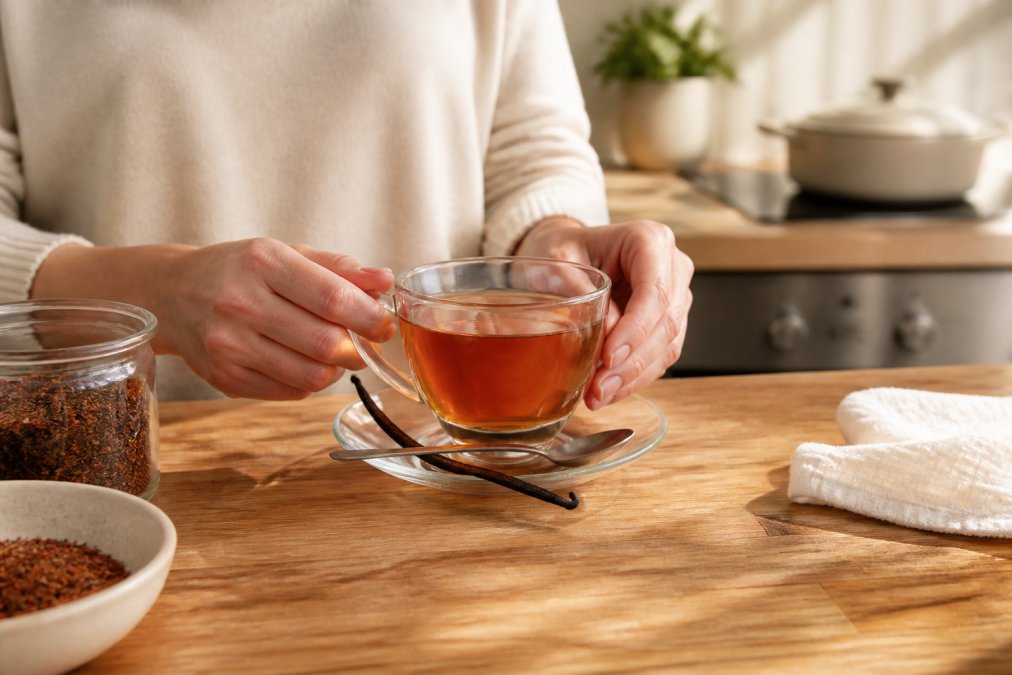
Brew rooibos at a full boil for five to seven minutes to extract the flavor and antioxidants. Unlike green or black tea, rooibos does not become bitter with longer steeping, so a strong brew is fine. Drink it plain, or add a cinnamon stick, a slice of orange, or a tiny splash of unsweetened vanilla extract for extra depth without sugar.

Rooibos vs. Sugary Beverages: A Practical Swap
The most reliable weight loss benefit of vanilla rooibos tea comes from what it replaces. A 12-ounce can of regular soda contains roughly 150 calories, almost entirely from sugar. A 16-ounce vanilla latte with syrup can exceed 250 calories. Swap one of those for a cup of unsweetened vanilla rooibos and you cut hundreds of calories per day without feeling deprived.
Over a week, replacing a single daily soda with rooibos removes more than 1,000 calories from your diet. Over a month, that approaches the energy deficit needed to lose about a pound. This is not rapid weight loss, but it is sustainable, and it does not require willpower against a sweet craving because the tea satisfies it.
Beverage Swap | Calories Saved Per Serving | Daily Impact |
|---|---|---|
Soda to vanilla rooibos | ~150 calories | 1,050 calories per week |
Sugary latte to vanilla rooibos | ~200 calories | 1,400 calories per week |
Juice to vanilla rooibos | ~110 calories | 770 calories per week |
Conclusion: Is It Worth Adding to Your Routine?
Vanilla rooibos tea is not a fat burner, and treating it as one sets up disappointment. Its genuine value for weight loss is as a calorie-free, caffeine-free substitute for the sugary and creamy drinks that undermine most diets. It supports hydration, satisfies sweet cravings, and fits into an evening routine without disturbing sleep.
For the best results, choose a loose leaf rooibos with natural vanilla flavor rather than a pre-sweetened product. Our Vanilla Cream rooibos blend combines rooibos with sweet vanilla and a touch of chocolate at under three calories per cup, and the [Chocolate Mint(/chocolate-mint.html) rooibos | octaviatea.mom] offers a similar dessert-like profile. Both are USDA certified organic and free of artificial ingredients, so you know exactly what you are drinking.
Frequently Asked Questions
Does rooibos tea burn belly fat?
No tea burns belly fat on its own, and rooibos is no exception. Weight loss happens when you maintain a calorie deficit. Rooibos supports this process indirectly. It is naturally calorie-free, which makes it a smart swap for sugary drinks. Some studies suggest compounds like aspalathin may influence metabolism and fat oxidation, but these effects are modest. The most reliable benefit is replacing high-calorie beverages with rooibos, which reduces your total daily intake without feeling deprived.
Is it okay to drink rooibos tea every day?
Yes, drinking rooibos tea daily is safe for most people. Because it is naturally caffeine-free, it won't disrupt your sleep or cause the jitters associated with regular tea or coffee. It also contains no oxalic acid, which makes it gentler on the kidneys than some other teas. For weight management, having two to three cups a day can help you stay hydrated and curb cravings for sweet snacks. Just avoid adding sugar or honey if your goal is weight loss.
Does vanilla rooibos tea have calories?
Plain rooibos tea has less than three calories per cup, and Octavia Tea's Vanilla Cream blend stays under three calories per cup. The calorie count only becomes significant if you add sweeteners or milk. A teaspoon of sugar adds about 16 calories, and a splash of whole milk adds roughly 9 calories. To keep vanilla rooibos tea a true zero-calorie beverage for weight loss, drink it plain or with a squeeze of lemon instead of sweeteners.
Which is healthier, rooibos or green tea for weight loss?
Both teas support weight loss, but they work differently. Green tea contains caffeine and catechins, which can temporarily raise metabolic rate and increase fat oxidation. Rooibos is caffeine-free and contains aspalathin, a polyphenol that may help regulate blood sugar and reduce stress-related fat storage. If you are sensitive to caffeine or prefer an evening drink, rooibos is the better choice. For a morning metabolism boost, green tea may offer a slight edge. Many people rotate both throughout the day.


Octavia Tea Sign In
Create New Account