


How to Make Chocolate Earl Grey Lattes at Home

Table of Contents
- Why Chocolate and Earl Grey Belong in the Same Cup
- What You'll Need for a Chocolate Earl Grey Latte
- How to Make a Chocolate Earl Grey Latte: Step by Step
- Choosing the Best Loose Leaf Organic Tea for Lattes
- How to Froth Milk for Tea Lattes (With or Without a Frother)
- Dairy-Free Milk Alternatives for Tea Lattes
- Caffeine, Ratios, and Flavor Balance
- Troubleshooting: When Your Latte Goes Wrong
- Frequently Asked Questions
Last Updated: September 16, 2026
Why Chocolate and Earl Grey Belong in the Same Cup
Bergamot and cocoa are a classic pairing because the citrus oils cut through fat while the chocolate adds body. A chocolate earl grey latte works on the same principle. This guide from Octavia Tea covers steeping, frothing, and fixing a drink that has gone flat.
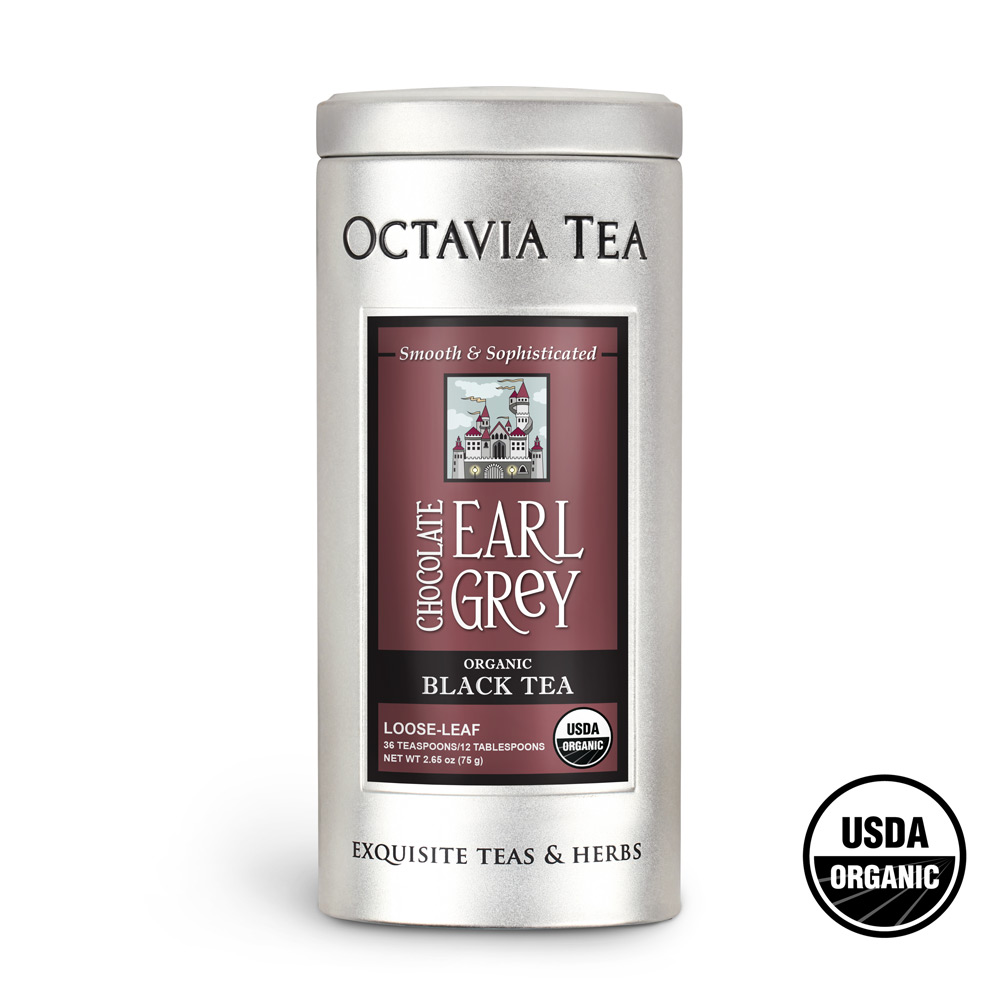
What You'll Need for a Chocolate Earl Grey Latte
The ingredient list is short, but each item affects the final cup. Get the core three right and the drink works without fancy equipment.
Tea, Chocolate, and Milk: The Core Three
- Chocolate Earl Grey tea, loose leaf gives you room to adjust strength; a tea bag works in a pinch but releases flavor faster and turns bitter sooner
- Milk, dairy or plant-based, ideally one with enough fat or protein to froth
Optional Add-Ins That Change the Drink
- Vanilla extract, a few drops round out the bergamot
- Honey or brown sugar, sweeten after tasting, not before
- A pinch of salt, makes the chocolate taste more like chocolate
- Whipped cream, for a dessert-style finish
- Chocolate (optional additional chocolate), a chopped square of dark chocolate, a spoonful of cocoa powder, or a small amount of melted chocolate all work
How to Make a Chocolate Earl Grey Latte: Step by Step
The process takes about 10 minutes and follows three stages: steep, melt, froth. Rushing any stage shows up in the cup.
Step 1: Steep the Tea
Heat water to just below boiling, around 200°F. Steep one heaping teaspoon of loose leaf Chocolate Earl Grey for 3 to 4 minutes. Going longer pulls out tannins and makes the cup astringent, which no amount of milk will fix. Remove the leaves and set the tea aside.
Step 2: Melt the Chocolate Into the Tea (optional if additional chocolate is desired)
While the tea is still hot, add your additional chocolate to taste and whisk until it dissolves. Cocoa powder needs more agitation than a chopped square. If using melted chocolate, add it slowly and keep whisking so it emulsifies rather than sitting in a slick on the surface.
Step 3: Froth the Milk and Combine
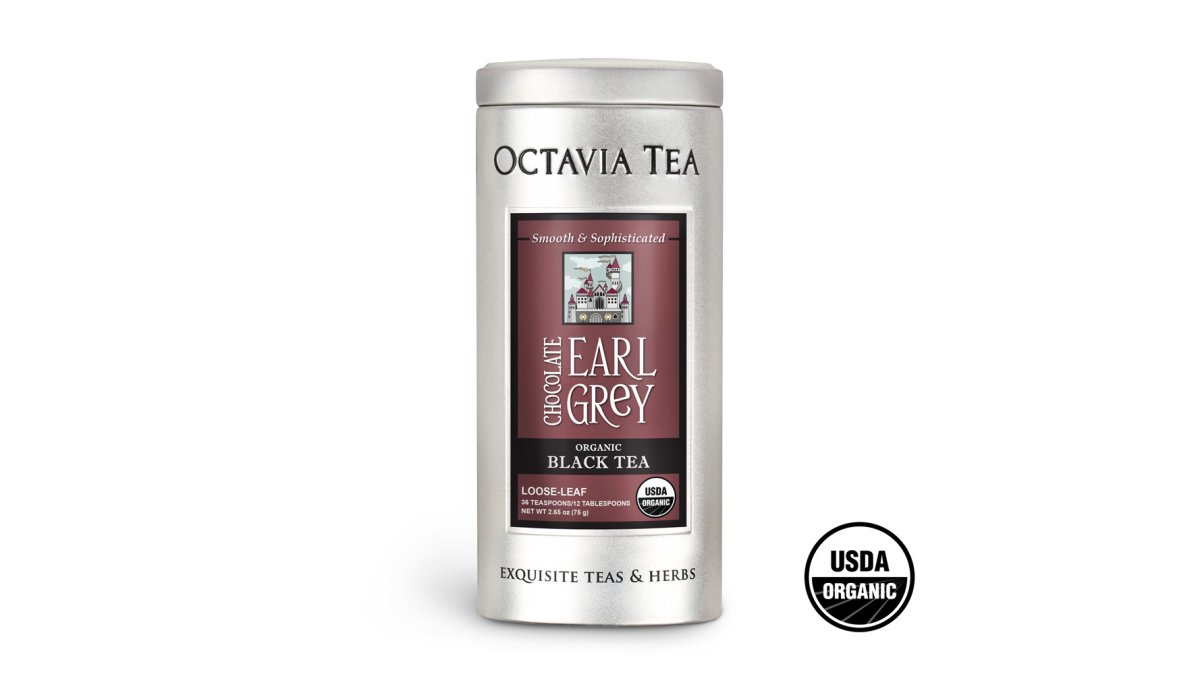
Choosing the Best Loose Leaf Organic Tea for Lattes
The best loose leaf organic tea for lattes is a full-leaf black tea with real flavoring, not dust and artificial oils. Larger pieces steep evenly and don't turn harsh when you push the brewing time.
How to Froth Milk for Tea Lattes (With or Without a Frother)
You don't need a steam wand to froth milk for tea lattes, but the device you pick changes the texture and technique. Treating every method as interchangeable is why home lattes come out flat or foamy-wrong. Here's how each tool behaves.
Handheld Frother
Best for single cups and the most forgiving tool in the drawer. Submerge the whisk just below the surface, not at the bottom, and hold for 15-20 seconds, moving in small circles. Burying the whisk aerates the whole pitcher and gives thin bubbles rather than microfoam. Warm the milk to about 140°F first, then froth.
French Press
The best no-cost option if you already own one. Add warm milk (about 140°F) to the carafe, put the lid on, and pump the plunger 20-30 times with steady strokes. The mesh filter forces air through the milk, producing a looser, airier foam than a handheld frother, closer to cappuccino than flat latte.
Jar Method
Fill a mason jar halfway with milk, seal tightly, and shake hard for about 30 seconds until the volume roughly doubles. Remove the lid and microwave in 30-second bursts until the foam sets and the milk is hot, usually one to two bursts. The foam is the least stable of the four methods, so pour immediately.
Espresso Machine Steam Wand
If you have an espresso machine, this produces the silkiest result, but it's the easiest to ruin. Start with cold milk in a cold pitcher, submerge the tip just below the surface, and introduce air for only the first few seconds (a short, soft hiss). Once volume grows by about a third, sink the wand deeper and let it spin the milk into a vortex until it reaches about 140°F.
Temperature Is the Variable Everyone Skips
Across all four methods, the target is the same: bring the milk to roughly 140°F and no higher. Below that, foam is unstable; above it, milk's natural sweetness fades and the texture turns grainy. Without a thermometer, pull the pitcher the moment it's too hot to hold comfortably for more than a second.
Matching the Method to the Drink
For a chocolate earl grey latte specifically, the French press and handheld frother both work well because the drink is built on a tea base, not espresso, you want a soft, pourable foam that folds into the tea rather than a stiff cap. A steam wand gives the most polished result if you're comfortable with it.
Dairy-Free Milk Alternatives for Tea Lattes
Dairy-free milk alternatives for tea lattes vary widely under heat and agitation. Some froth into stiff peaks; others break apart the moment they hit the tea.
Which Plant Milks Froth Best
- Oat milk: Best all-around choice. Creamy, neutral, and holds foam well. Barista versions perform even better.
- Almond milk: Light and slightly nutty. Froths acceptably but produces thinner foam.
- Soy milk: High protein content makes it froth reliably, close to dairy.
- Coconut milk: Rich and velvety but can taste strongly of coconut, which fights the bergamot.
- Hemp and rice milk: Thin and watery. Fine in the cup, poor for foam.
For this drink specifically, oat milk is the safest bet because its neutral flavor lets the chocolate and bergamot lead. Soy is the runner-up if you want more body.
Caffeine, Ratios, and Flavor Balance
Most recipes never add up the caffeine, which matters if you're drinking one after dinner. A chocolate earl grey latte stacks caffeine from two sources: the black tea and the chocolate. Neither is enormous alone, but together they land higher than most people assume.
Where the Caffeine Actually Comes From
- Black tea: An 8 oz cup of steeped black tea generally falls in the 30-50 mg range, depending on leaf grade, how much leaf you use, and steep time. A heaping teaspoon of full-leaf Chocolate Earl Grey steeped 3-4 minutes sits near the middle of that band.
- Chocolate: Cocoa solids carry a small amount of caffeine plus theobromine, a milder stimulant. A single square of dark chocolate (roughly 70% cacao) contributes only a few milligrams of caffeine, but the theobromine adds a gentle, longer-lasting lift that coffee doesn't provide.
- Cocoa powder: A tablespoon of unsweetened cocoa powder contributes a similar trace amount, small, but not zero.
Add it up and a single latte typically lands in the 35-60 mg range. An 8 oz cup of brewed coffee commonly runs 95-165 mg. So this drink is meaningfully lighter than coffee, but not caffeine-free, and the theobromine tail can keep some people alert longer than the caffeine number alone suggests.
What This Means for Evening Drinking
If you're sensitive to caffeine or drinking late, three levers reduce the load without wrecking the flavor:
- Shorten the steep. Caffeine extracts quickly; most of it is out by the 3-minute mark. Dropping to 2.5 minutes trims the total while keeping the bergamot intact.
- Cut the leaf slightly. Going from a heaping teaspoon to a level one reduces caffeine proportionally, though it also thins the body.
- Lean on cocoa powder over dark chocolate. The caffeine difference is minor, but cocoa powder lets you control sweetness and richness without adding a chocolate bar's worth of cocoa mass.
Ratios That Actually Move the Flavor
Ratios do more for balance than any single swap. Start here:
Component | Amount | Why It Matters |
|---|---|---|
Loose leaf tea | 1 heaping tsp | More leaf means more caffeine and more tannin |
Water | 8 oz, ~200°F | Below boiling protects the bergamot |
Steep time | 3-4 minutes | Longer turns astringent and raises caffeine |
Chocolate | 1 tbsp cocoa or 1 square | More adds richness but mutes citrus |
Milk | 4 oz | Two parts tea to one part milk |
Troubleshooting: When Your Latte Goes Wrong
Most problems trace back to temperature, timing, or ratio, not bad ingredients. Here's how to diagnose the common ones.
Problem | Likely Cause | Fix |
|---|---|---|
Chocolate sits on top in a slick | Tea too cool when chocolate added | Add chocolate while tea is still hot, whisk hard |
Drink tastes bitter | Steeped too long or too much leaf | Cut steep to 3 minutes, reduce leaf slightly |
Foam collapses immediately | Milk overheated or low protein | Keep milk under 150°F, switch to oat or soy |
Bergamot barely detectable | Too much milk or chocolate | Reduce milk to 3 oz, taste before adding more |
Thin, watery mouthfeel | Skim or low-fat plant milk | Use a barista-style or higher-fat milk |
Frequently Asked Questions
Do chocolate and Earl Grey go together?
Yes. Bergamot's citrus notes cut through chocolate's richness, so the two flavors sharpen each other instead of competing. The pairing works best with a tea that already carries cocoa notes, like a chocolate Earl Grey blend, because the base flavors are aligned. Dark or bittersweet chocolate keeps the citrus edge visible; white chocolate softens it into something closer to dessert.
What is the best type of chocolate to use for a tea latte?
Bittersweet or dark chocolate gives the clearest Earl Grey flavor because there is less sugar masking the bergamot. Cocoa powder dissolves fastest and produces the smoothest texture, while chopped chocolate adds body and a velvety mouthfeel. White chocolate works if you want a sweeter, creamier drink, but reduce any added sweetener so the cup does not turn cloying.
How do you properly steep loose leaf tea for a latte?
Use about one teaspoon of loose leaf per cup and water just off a boil, roughly 200 to 212 degrees Fahrenheit for black tea. Steep three to five minutes, then strain. For a latte, brew the tea stronger than you would drink it plain, since milk and chocolate will dilute the flavor. Oversteeping past five minutes pulls out bitterness that no amount of milk will hide.
Can you make a vegan chocolate Earl Grey latte?
Yes. Swap dairy milk for oat, almond, or soy milk, and check that your chocolate contains no milk solids. Oat milk froths into the creamiest foam of the three, while almond milk stays thinner but has a lighter flavor that lets the bergamot through. Sweeten with maple syrup or agave instead of honey if you are avoiding all animal products.


Octavia Tea Sign In
Create New Account