


Organic vs Non-Organic Tea: Health Risks to Know

Table of Contents
- Organic vs Non-Organic Tea: What Actually Differs
- Pesticide Residue in Tea: What the Testing Shows
- USDA Organic Tea Standards and What They Do Not Cover
- Steeping Duration, Water Quality, and Chemical Leaching
- Tea Bags vs Loose Leaf: Microplastics and Packaging Risk
- How to Choose the Best Organic Loose Leaf Tea Brands
- Conclusion: Reading the Leaf, Not the Label
- Frequently Asked Questions
Last Updated: September 12, 2026
Organic vs Non-Organic Tea: What Actually Differs
The difference between organic and non-organic tea comes down to how the leaves are grown and processed, not to a single guaranteed safety outcome. Organic tea is cultivated without synthetic pesticides or fertilizers under a certified system, while conventional tea may use approved agricultural chemicals. This guide from Octavia Tea breaks down what the research on organic vs non-organic tea health risks actually shows, from pesticide residue to heavy metals to packaging.
Here's the part most guides skip: a certified organic label governs farming inputs, not the full journey from soil to your cup. Processing, water quality, and packaging all shape what ends up in your brew.
Below, we cover what testing reveals, what USDA organic standards do and don't address, and how to choose tea with confidence.
Pesticide Residue in Tea: What the Testing Shows
Tea leaves are not washed before processing, so anything on the leaf surface during harvest can concentrate in the finished product. That single fact explains why residue testing matters more for tea than for many other crops.
Glyphosate and Synthetic Pesticides in Conventional Leaf
Glyphosate and other synthetic pesticides are widely used in conventional farming, and trace residues have been detected in some imported tea samples. Regulatory agencies set maximum residue levels for these compounds, but enforcement varies by origin and supply chain transparency. A common mistake is assuming "imported" means "tested at the border," when in practice much of the burden falls on the importer and brand.
Heavy Metals, Fluoride, and Bioaccumulation
Tea plants absorb fluoride and heavy metals like lead and aluminum from soil over time, a process called bioaccumulation. Older leaves and lower-grade material tend to carry higher concentrations than young buds. This is why soil health and farming practices at the estate level matter as much as the organic label itself.
USDA Organic Tea Standards and What They Do Not Cover
USDA organic certification is a production-and-handling standard, not a finished-product safety test. Understanding that distinction is the single most useful thing a tea buyer can carry into a store.
The rules live in the USDA National Organic Program (NOP), administered by the Agricultural Marketing Service (ams.usda.gov). For tea, certification means the farm has been inspected and its practices documented against a defined list of allowed and prohibited substances. The USDA National Organic Program standards prohibit synthetic pesticides and most synthetic fertilizers, require a buffer zone between organic and conventional plots, and mandate a three-year transition period before a field can be certified.
What the Seal Actually Guarantees
- No synthetic pesticides or fertilizers applied on the certified acreage
- No sewage sludge, irradiation, or genetic engineering in production
- Documented record-keeping and annual on-site inspection by an accredited certifier
- A defined separation between organic and conventional product in handling and storage
What It Does Not Guarantee
Here is the gap that catches buyers off guard. NOP rules govern inputs and practices, not contaminant levels in the finished leaf. Certification does not require:
- Batch-level testing for heavy metals such as lead, cadmium, or aluminum
- Fluoride testing, even though tea plants accumulate fluoride from soil over years
- Testing for residues that drift in from neighboring conventional fields
- Verification that a finished retail package contains only certified leaf
A farm can be fully compliant and still grow on soil with naturally elevated cadmium or aluminum. The certifier is auditing practices, not running a lab panel on every harvest.
Adulteration and Supply-Chain Blending
Adulteration, conventional leaf blended into an organic supply chain, is a documented risk that certification alone will not catch, because the fraud typically happens after the farm gate, in trading, blending, or repackaging. The organic seal travels with paperwork; it does not travel with a lab result. Reliance on organic certification standards remains a flawed safeguard when supply chain transparency is absent, a systemic vulnerability that mirrors the challenges faced when evaluating whether organic coffee certification is worth it.
The Verification Step Most Buyers Skip
If you want batch-level assurance, the practical tool is a Certificate of Analysis (COA), a lab report tied to a specific lot number. A useful COA names the testing laboratory, the lot or batch code, the analytes tested (for example lead, cadmium, arsenic, and pesticide panels), the method used, and the result against a stated limit. A COA that lists no lot number, no lab name, or no detection limits tells you very little.
When you request one, ask two questions: Which lot is this for? and What was the limit of detection? A brand that can answer both is doing the testing work; a brand that can only send a certificate PDF is not.
Steeping Duration, Water Quality, and Chemical Leaching
How long you steep and what water you use affect how much of any compound ends up in your cup. This is the part of tea safety you actually control, and it is where most guides stop short.
Extraction Is a Curve, Not a Switch
Hot water pulls soluble compounds out of the leaf along a curve. The first minute or two extracts most of the caffeine, catechins, and flavor compounds. Fluoride and many metals continue to release more slowly, so a long steep keeps adding to the total even after the tea tastes done. That is why a five-minute steep is not simply a stronger version of a two-minute steep, it is a different chemical profile.
Leaf grade matters here too. Broken leaf and dust expose far more surface area per gram than whole leaf, so they release their soluble content faster and more completely. A whole-leaf tea steeped for three minutes and a dust-grade tea steeped for three minutes are not delivering the same load.
Water Quality Changes What the Leaf Releases
This is the angle most articles skip entirely: the water is not a neutral solvent. Its mineral content and pH change how much the leaf gives up.
- Hard water carries dissolved calcium and magnesium. Those minerals can bind with some compounds and shift how much stays in solution, and they also change how the tea tastes.
- Low-pH water tends to keep more metal ions dissolved, meaning they stay in the cup rather than settling out.
- Tap water arrives with its own trace contaminants, lead from older service lines, disinfection byproducts, and whatever the local utility reports. Those add to whatever the leaf releases.
- Filtered water removes a meaningful share of that baseline, so the leaf is the main variable again.
In other words, the same tea steeped in unfiltered tap water and in filtered water can deliver different total exposures. The leaf is only half the equation.
A Practical Steeping Protocol
| Factor | Lower Exposure | Higher Exposure |
|---|---|---|
| Steeping time | 2-3 minutes | 5+ minutes |
| Leaf grade | Young buds, whole leaf | Older, broken leaf, dust |
| Water source | Filtered, neutral pH | Unfiltered tap, especially older plumbing |
| Water temperature | Just off boil for most teas | Rolling boil held long |
| Number of infusions | First infusion discarded if concerned | Repeated long steeps of the same leaf |
| Processing | Minimal, whole leaf | Heavily processed dust and fannings |
A few habits follow from this. Use filtered water. Keep steeping time in the two-to-three-minute range unless the tea style calls for longer. If you are working with an older or lower-grade leaf and want to reduce exposure, a quick rinse-and-discard of the first infusion is a common approach, it sacrifices some flavor along with some of the soluble load.
Tea Bags vs Loose Leaf: Microplastics and Packaging Risk
Many tea bags are sealed with plastic-based materials, and some release microplastics into hot water during steeping. A study cited by McGill University's Office for Science and Society found that a single plastic tea bag can shed billions of microplastic particles per cup. Loose leaf sidesteps this entirely because there is no bag to steep.
Packaging-induced contamination is one of the angles most guides miss. Beyond the bag, some sachets use bleached paper or synthetic mesh. Loose leaf tea, stored in a tin, avoids both problems.
How to Choose the Best Organic Loose Leaf Tea Brands
Choosing the best organic loose leaf tea brands means looking past the label to sourcing, testing, and transparency. A brand that publishes where its leaves come from and how they're handled gives you more to trust than one that only prints a seal.
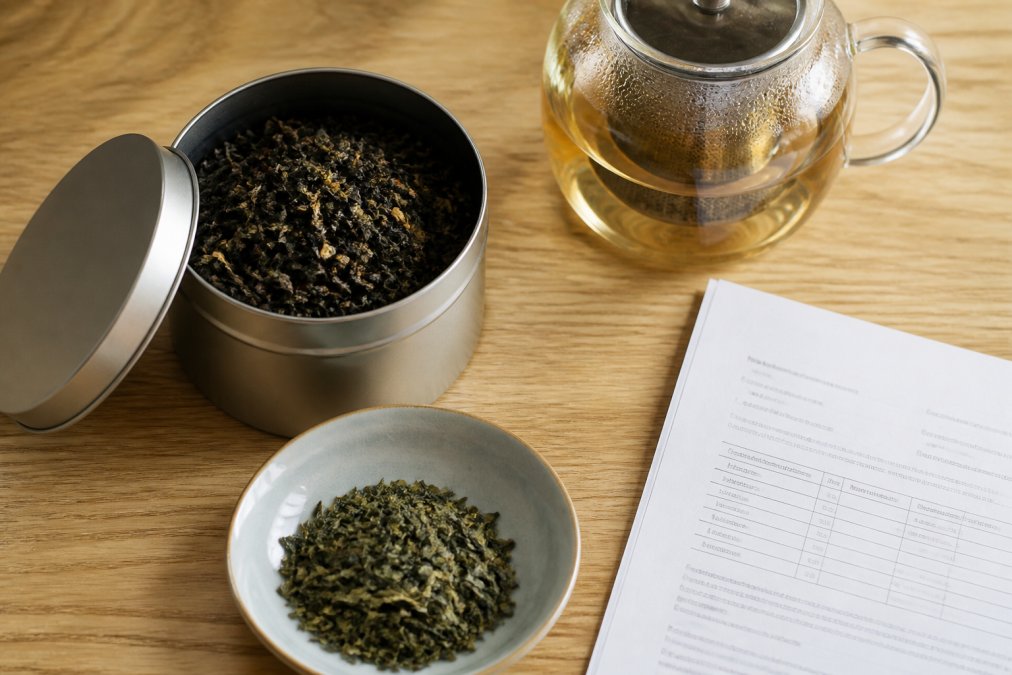
Start with these checks:
- Is the tea certified organic by a recognized body?
- Does the brand name the estate or region of origin?
- Can they provide a Certificate of Analysis on request?
- Is the leaf whole, or broken dust?
- Is it packaged in a tin or unbleached material?
Octavia Tea sources over 120 organic loose leaf teas directly from estate gardens, hand-blended with natural flavor essences and pure essential oils rather than artificial ingredients. That direct sourcing model makes it easier to trace where a leaf came from.
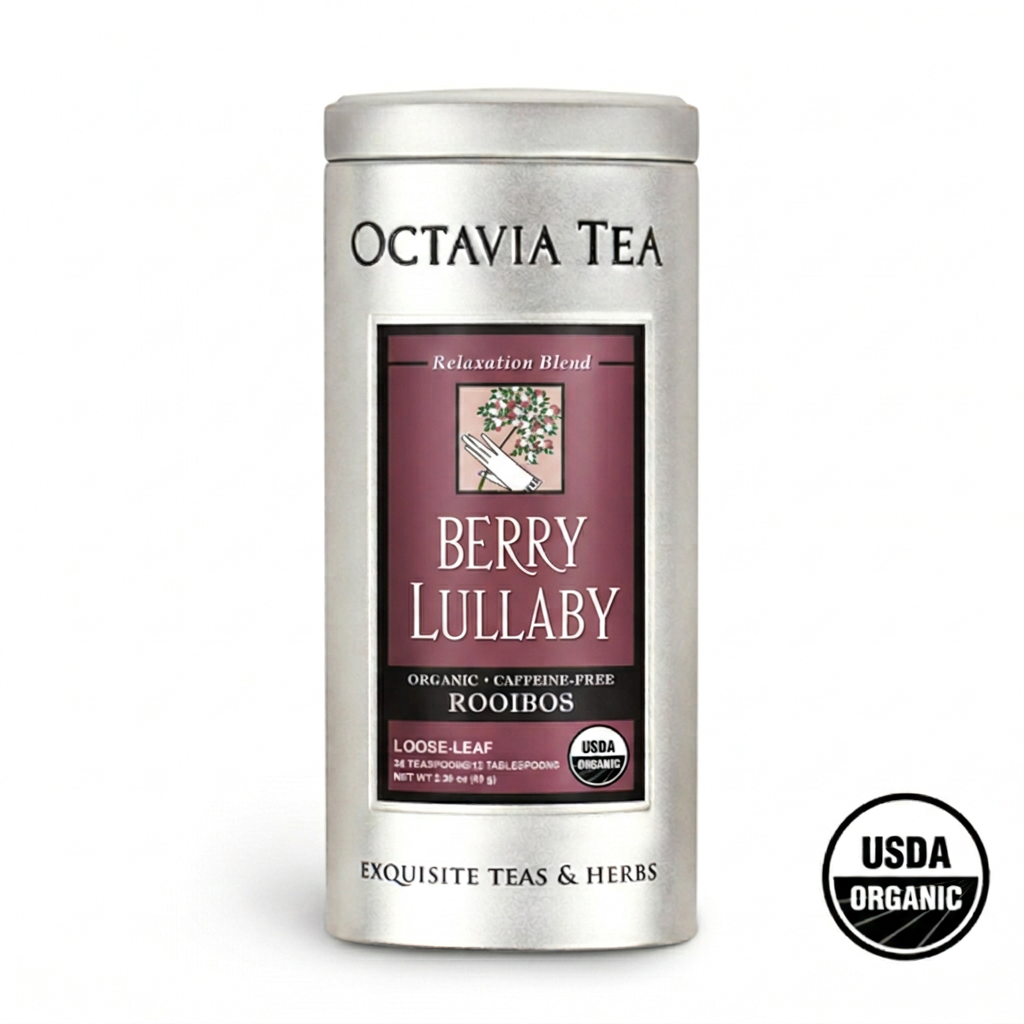
For a caffeine-free option, Berry Lullaby blends rooibos, blueberry, and hibiscus for a calming cup. Berry Cabernet delivers a tart, fruit-forward herbal blend that works hot or cold-brewed. Both come in at a straightforward price point, and Octavia Tea offers free domestic shipping on retail orders over $65.
Conclusion: Reading the Leaf, Not the Label
Sorting through organic vs non-organic tea health risks gets easier once you stop treating the seal as the finish line. Farming inputs, soil health, processing, water quality, and packaging all shape what's in your cup. The brands worth your trust show their sourcing, not just their certification.
At Octavia Tea, we source organic loose leaf teas directly from estate gardens, hand-blend with natural ingredients, and keep the supply chain transparent enough to answer the questions that matter. Browse the collection and find a cup you can feel good about. Add to Bag.
Frequently Asked Questions
What are the potential health risks of pesticides in non-organic tea?
Conventional tea can carry residues of synthetic pesticides. Because tea leaves are steeped rather than eaten, some residues can transfer into the cup, and long-term daily consumption can contribute to cumulative contaminant exposure. The risk depends on residue levels, steeping duration, and how much tea you drink. Choosing certified organic tea can help reduce pesticide residue in tea because synthetic pesticides are barred under USDA organic standards.
How does the USDA Organic certification ensure tea safety?
USDA organic tea standards prohibit synthetic pesticides, synthetic fertilizers, and sewage sludge on certified farms, and require buffer zones between organic and conventional fields. Certified operations are inspected annually by USDA-accredited agents, and imported tea must meet the same rules. The seal does not guarantee zero heavy metals or fluoride, since those come from soil and geology, so third-party testing and a Certificate of Analysis still matter when you want proof of purity.
Are there heavy metal risks associated with conventional tea farming?
Tea plants absorb lead, aluminum, and fluoride from soil, and older leaves and mature bushes tend to accumulate more. Lead contamination has been found in both conventional and organic leaf. Rotating origins, favoring younger leaf grades, and buying from brands that publish third-party testing results may help manage contaminant exposure.
Does brewing method affect the intake of chemical residues in tea?
Yes. Longer steeping duration and hotter water extract more of what is in the leaf, including pesticide residue and fluoride. A three-minute steep at the recommended temperature transfers less than a ten-minute steep. Water quality also interacts with extraction: very soft water pulls more compounds from the leaf, while filtered water reduces what you add on top. For loose leaf tea, follow the brand's steep time, and avoid re-steeping a batch past its useful life.


Octavia Tea Sign In
Create New Account