


Green Tea vs Herbal Tea for Sleep Quality: 2026 Guide

Table of Contents
- Green Tea vs Herbal Tea for Sleep Quality: A Quick Comparison
- How Green Tea and Herbal Tea Differ
- L-theanine Sleep Benefits: The Calm Focus Amino Acid
- Caffeine Free Tea: Why Herbal Tisanes Win at Bedtime
- Best Herbal Tea for Sleep: Our Top Picks
- When Green Tea Still Works: Timing, Tolerance, and Trade-Offs
- Frequently Asked Questions
Last Updated: September 14, 2026
Green Tea vs Herbal Tea for Sleep Quality: A Quick Comparison
The green tea vs herbal tea for sleep quality debate comes down to one compound: caffeine. Green tea contains it, most herbal teas do not, and that difference shapes how each affects your night. This guide from Octavia Tea breaks down the chemistry, timing, and trade-offs.
Herbal tisanes win at bedtime for most people: they are naturally caffeine-free and often contain sedative botanicals. Green tea can still fit an evening ritual if you drink it early enough and know your caffeine sensitivity.
Factor | Green Tea | Herbal Tea |
|---|---|---|
Caffeine | Present (a stimulant) | Caffeine-free (tisanes) |
Key compound | L-theanine | Varies by botanical |
Best time | Morning to early afternoon | Evening, before bed |
Sleep impact | Can delay sleep onset | Supports relaxation |
Source plant | Camellia sinensis | Blends of herbs, flowers, roots |
How Green Tea and Herbal Tea Differ
The core difference is the plant. Green tea comes from Camellia sinensis, the same species used for black and oolong tea. Herbal tea, more accurately called a tisane, is an infusion of anything else: flowers, roots, bark, spices, or fruit.
That split explains why the two behave so differently at night: one is a caffeinated daytime beverage, the other a category of caffeine-free infusions long used to wind down.
What Green Tea Contains
Green tea's active compounds include caffeine, L-theanine, and polyphenols such as epigallocatechin gallate. Caffeine content varies with leaf age, brewing time, and water temperature: a light brew is milder, a long hot steep pulls out more.
L-theanine is the amino acid behind green tea's "calm focus" reputation. It softens caffeine's edge without eliminating it, so if you are stimulant-sensitive, that caffeine still shows up at bedtime.
What Herbal Tea Contains
Herbal tea contains no caffeine because it contains no tea leaves. Its effects depend entirely on the botanicals in the blend, chamomile, valerian root, lavender, and spearmint are the most common evening choices. Many tisanes are also rich in antioxidants and polyphenols, though different types than green tea's. Herbal blends are built for relaxation, not stimulation.
L-theanine Sleep Benefits: The Calm Focus Amino Acid
L-theanine is an amino acid found almost exclusively in tea leaves, and it is why green tea does not hit like coffee. It promotes relaxed alertness rather than jittery energy.
The L-theanine sleep benefits are real but limited. It can take the edge off caffeine and support a calmer nervous system, which may help some people fall asleep more easily after green tea earlier in the day. What it cannot do is cancel out caffeine, a strong cup at 9 p.m. will not be overridden by L-theanine. L-theanine works best as a daytime tool: pair it with modest caffeine in the morning or early afternoon for focus without the crash.
Caffeine Free Tea: Why Herbal Tisanes Win at Bedtime
Caffeine-free tea is the simplest answer for anyone who wants a warm drink before bed without paying for it at 2 a.m. Herbal tisanes fit by default, which is why they dominate evening rituals. But "caffeine-free" is only the entry ticket, what separates a tisane that helps you sleep from one that just tastes nice is which botanicals are in it and how much.
How Caffeine Disrupts Sleep Architecture
Caffeine does not just keep you awake, it changes the shape of your night. It blocks adenosine, the molecule that builds up over the day and creates sleep pressure, muting that signal.
The measurable effects when caffeine is consumed too close to bed:
- Longer sleep latency, more time lying awake before you fall asleep.
- Reduced total sleep time, you wake earlier or sleep less overall.
- Less slow-wave sleep, the deep, restorative stage your body uses for physical recovery.
- More fragmented sleep, more brief awakenings you may not even remember.
For people with caffeine sensitivity, even a small amount late in the day can nudge these numbers the wrong way, the case for going caffeine-free after lunch, not just after dinner.
Chamomile: The Best-Evidenced Gentle Option
Chamomile is the most recognized bedtime botanical, and its sedative properties come from compounds including apigenin, a flavonoid that binds weakly to the same benzodiazepine receptors prescription sedatives target. That is why chamomile feels calming rather than knock-out strong.
Evidence quality: moderate. Multiple small trials found modest improvements in sleep quality and daytime tiredness with chamomile extract, but effects are gentle and studies small (pubmed.ncbi.nlm.nih.gov). It is a low-risk first choice.
Whole chamomile flowers, rather than crushed dust in a bag, deliver more flavor and more of the compounds you want, which is why loose-leaf tends to outperform the supermarket version.
Valerian Root: Studied, but Results Vary
Valerian root has been used as a sleep aid since ancient times and remains one of the more studied botanicals for insomnia. Its compounds appear to increase GABA availability, the brain's main inhibitory neurotransmitter, the same pathway sedatives and anti-anxiety medications act on (Checking your browser).
Evidence quality: mixed. Some trials show improved sleep latency and subjective sleep quality; others show no difference from placebo. Valerian helps some people and does nothing for others, with no reliable way to predict which group you are in without trying it.
Valerian is not a knock-out agent. It works gradually, often over one to two weeks of consistent use. A common mistake is expecting it to act like a sleep medication, think of it as a supportive herb, not a replacement. It is also the botanical most likely to interact with prescription drugs, so check with a pharmacist first.
Lavender: Aromatherapy Evidence Is Stronger Than Tea Evidence
Most sleep research on lavender involves inhalation, not ingestion. Inhaled lavender has been linked to reduced anxiety and improved sleep quality in several small studies, likely through nervous-system effects rather than sedation. As a tea ingredient it is pleasant and mildly calming, but the evidence for drinking it is thinner than for smelling it, a reasonable ritual, not a strong sleep intervention.
Lemon Balm, Passionflower, and the Rest
Beyond the big three, a few other botanicals show up in evening blends:
- Lemon balm, a mint-family herb with mild calming effects and some evidence for reducing anxiety and improving sleep quality.
- Passionflower, traditionally used for anxiety and sleep, with small trials suggesting modest benefit.
- Spearmint, primarily a flavoring agent in sleep blends; its role is to make valerian and chamomile drinkable, not to sedate.
- Rooibos, caffeine-free and rich in antioxidants, but not a sedative. It is a good base for a bedtime blend, not an active ingredient.
How to Read a Sleep Tea Label
A blend that lists chamomile first and valerian last contains mostly chamomile. Ingredient lists are ordered by weight, so the first two or three entries are what you are actually drinking. If a product markets itself on valerian but lists it near the bottom, you are paying for the name, not the dose. Look for blends where active botanicals appear early, and prefer loose-leaf over bags.
Best Herbal Tea for Sleep: Our Top Picks
The best herbal tea for sleep is caffeine-free, made with quality botanicals, and pleasant enough that you look forward to drinking it. Flavor matters more than people admit, a tea you dread will not become a habit. Finding a blend that satisfies your palate is essential for consistency, especially when you are exploring how natural sleep aids can support a more restful nightly routine.
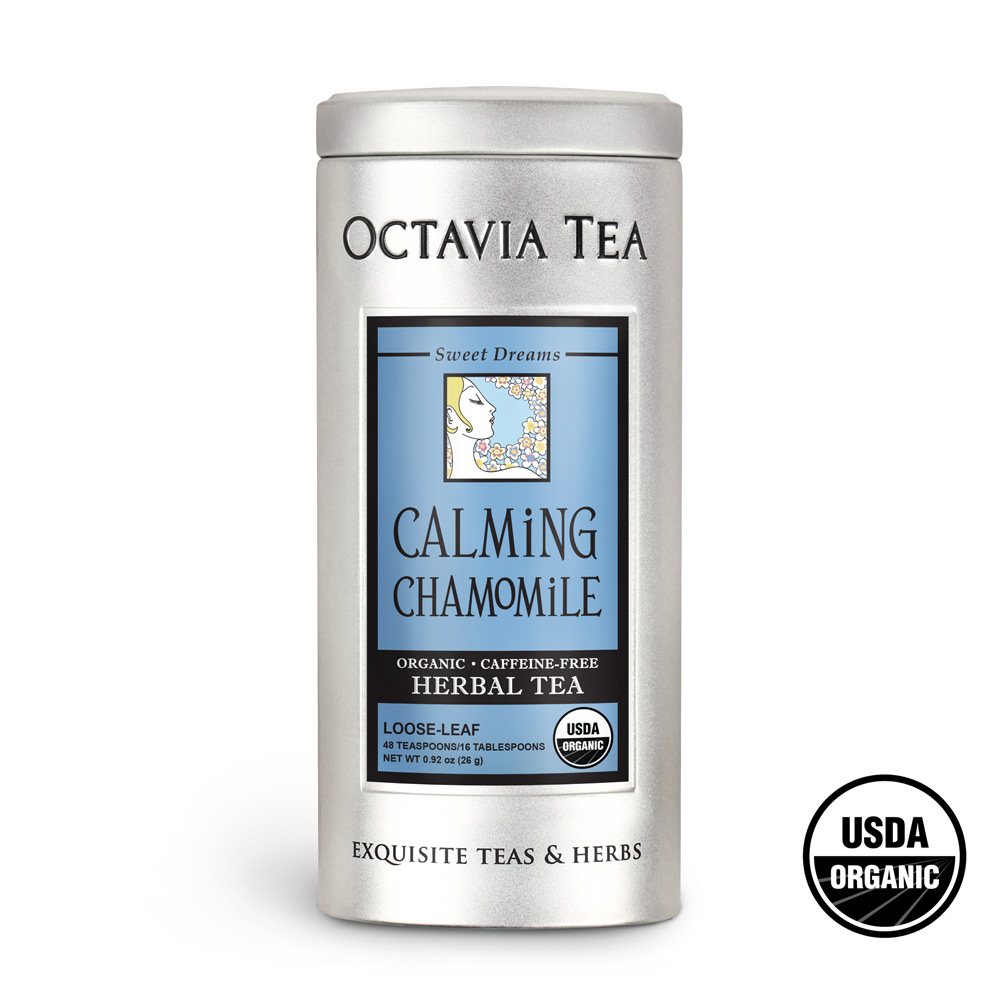
- Calming Chamomile ($3.50): Whole chamomile flowers with a honey-and-apple fragrance. The straightforward choice for a peaceful night's sleep.
- Serene Dream ($3.50): Valerian root, lavender, spearmint, and chamomile in one mood-mellowing blend designed to ease anxiety and promote rest.
- Chamomile Mango ($3.00): Golden chamomile with tropical fruit notes, for anyone who finds plain chamomile too plain.
- Berry Lullaby ($4.00): Caffeine-free rooibos with blueberries, hibiscus, and a touch of chamomile. Full-bodied and excellent iced.
- Lemon Green ($3.50): A green tea option for earlier in the day, blending antioxidant-rich leaves with lemon-lime and a honey-like finish.
When Green Tea Still Works: Timing, Tolerance, and Trade-Offs
Green tea can belong in an evening routine, but only for some people and only with the right timing. The deciding factors are how fast your body clears caffeine, how much you brewed, and what else is in your medicine cabinet.
Your Caffeine Clearance Is Genetic
Caffeine is metabolized primarily by a liver enzyme called CYP1A2, and the gene that codes for it comes in variants. Fast metabolizers clear caffeine quickly and may feel nothing from an afternoon cup; slow metabolizers clear it at roughly half that rate and can still feel a morning cup at bedtime. That is why blanket advice like "no caffeine after 2 p.m." works for one person and fails another.
A few practical signals that you are a slow metabolizer:
- A single cup of green tea in the early afternoon keeps you alert past your normal bedtime.
- Coffee makes you jittery rather than focused, even in small amounts.
- You notice a racing feeling or a wired-but-tired sensation after caffeinated drinks.
If any of those sound familiar, treat green tea as a morning-only beverage and switch to a caffeine-free tisane after lunch. If none do, a lightly brewed cup in the early evening is unlikely to cost you sleep.
Caffeine Half-Life, in Plain Numbers
Caffeine's average half-life in healthy adults is roughly five hours, so about half of what you drank is still circulating five hours later (Pharmacology of Caffeine). A 30-milligram cup at 4 p.m. leaves roughly 15 milligrams at 9 p.m., small, but not zero, and enough to matter for sensitive sleepers. A strong, long-steeped 50-milligram cup leaves around 25 milligrams at that hour.
That math is the entire argument for timing. Green tea's caffeine swings widely with leaf age, water temperature, and steep length, so a gentle 30-second steep at lower temperature delivers meaningfully less than a three-minute boil. If you want green tea in the evening, brew it light and drink it early.
Temperature and Hydration Do Real Work
There is a second, non-chemical effect worth naming. A warm beverage raises your core temperature slightly and then lets it fall, and that gentle downward drift is one of the cues your body uses to initiate sleep. Sipping something warm, green or herbal, can support sleep onset independent of what is dissolved in the cup, and drinking it slowly keeps you hydrated without the late-evening chug that sends you to the bathroom at 3 a.m.
The Ritual Effect Is Not Nothing
The placebo effect of a bedtime ritual is real and measurable in sleep research. Boiling water, measuring leaves, waiting for the steep, and sitting down with a cup signals to your nervous system that the day is closing. That sequence works whether the cup is green or herbal, and it is one reason a tea habit outperforms a capsule. Between two teas of similar caffeine, pick the one whose preparation you enjoy more, the ritual is part of the mechanism.
Check Your Medications Before You Add Botanicals
Sedative botanicals are not inert, and several interact with common prescription drugs.
- Valerian root may amplify the effects of sedatives, sleep aids, and some antidepressants, and there are case reports of liver concerns when combined with certain medications. If you take a benzodiazepine, a sleep prescription, or an SSRI, talk to your pharmacist before making valerian a nightly habit.
- Chamomile is generally low-risk, but it belongs to the same plant family as ragweed, and people with daisy-family allergies sometimes react. It can also interact with blood thinners.
- Lavender is well tolerated in tea amounts, but concentrated lavender products have been associated with hormonal effects in some users.
- St. John's wort, sometimes blended into calming tisanes, is a well-documented interactor with antidepressants, birth control, and other medications. Read the ingredient list, not just the front of the box.
A pharmacist can run a quick interaction check in minutes, a far better use of your time than guessing.
Frequently Asked Questions
Does green tea contain enough caffeine to affect sleep?
Yes. Green tea typically contains 20 to 50 mg of caffeine per 8-ounce cup, and caffeine is a stimulant that can delay sleep onset and reduce restorative sleep. Caffeine sensitivity varies widely because individual metabolism affects how quickly your body clears it. If you are sensitive, stop drinking green tea at least six hours before bed, or switch to a caffeine free tea such as an herbal tisane in the evening.
What are the best herbal teas for promoting deep sleep?
Chamomile, valerian root, lavender, and rooibos are the most studied options. Chamomile has mild sedative properties that support relaxation, while valerian root is traditionally used for insomnia. Blends that combine several of these herbs, like a chamomile-valerian mix, can address both sleep latency and nighttime restlessness. Look for organic, whole-flower or whole-root ingredients to maximize freshness and effect.
Can drinking tea before bed cause insomnia?
Tea can interfere with sleep if it contains caffeine. Green tea, black tea, and oolong are all made from Camellia sinensis and contain caffeine, which can worsen insomnia in sensitive people. Herbal tisanes, by contrast, are naturally caffeine-free and often have anxiolytic or sedative properties that support sleep. The key is to match the tea to the time of day: caffeinated green tea earlier, caffeine-free herbal tea in the evening.
How long before bed should you stop drinking green tea?
Most sleep experts recommend stopping caffeine at least six hours before bedtime, which means no green tea after mid-afternoon if you plan to sleep at 10 p.m. If you have caffeine sensitivity or a slower metabolism, extend that window to eight hours. Switching to a caffeine-free herbal tea in the evening lets you keep a bedtime routine without the stimulant effect.
Does L-theanine in green tea help with sleep?
L-theanine is an amino acid in green tea that promotes calm focus and may take the edge off caffeine's stimulant effect. It can support relaxation without drowsiness, which is helpful during the day. However, L-theanine sleep benefits are limited when caffeine is present, so green tea is not the best choice for sleep onset. For sleep quality, a caffeine-free herbal tea that supports the nervous system is more effective.


Octavia Tea Sign In
Create New Account